
The confusion between receive and recieve is one of the most common spelling issues in English writing. I still remember checking an email in a business report where a small typo like recieve almost affected the credibility of the whole document. In formal and academic writing, only receive is the correct, standard, and accepted version in British English, American English, and across global English used in the UK, US, Commonwealth, India, USA, and Canada. The wrong form recieve is always an incorrect error, often caused by confusion, uncertainty, and fast typing speed on mobile keyboard or outdated software.
The main rule based learning strategy comes from i before e except after c, which connects vowels arrangement and pattern recognition in language learning. Many ESL learners, native speakers, and even experienced editors rely on spell checker, proofreading, and manual review to avoid misspellings, but true accuracy comes from memory, recall, and visualization.
Think of c + e + i + v + e as a structured ceiving pattern, supported by rhyming, association, and reinforce learning strategy techniques. Words like deceive, believe, chief, and perceive show the same structure, while exceptions like percieve or reive highlight common mistakes in writing improvement. In real communication, whether it’s a text message, email, feedback, application, or even a performance bonus notice, using the correct verb receive improves professionalism, clarity, trust, and overall perception in work, career, and organisation settings.
Quick Answer of Receive or Recieve
- ✅ Receive is the correct spelling.
- ❌ Recieve is incorrect.
- Use receive whenever you mean “to get something.”
- The word follows a common English spelling pattern.
- If you write recieve, it is considered a spelling mistake.
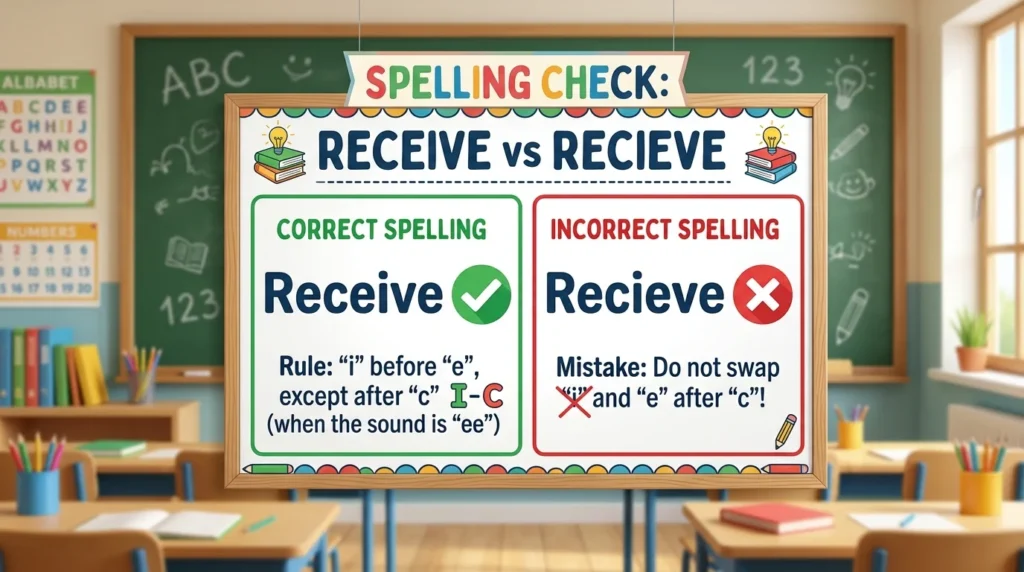
Example:
- ✅ I received your message.
- ❌ I recieved your message.
Simple Origin or Background Explanation of Receive or Recieve
The word receive comes from older forms of English that were influenced by languages such as French and Latin.
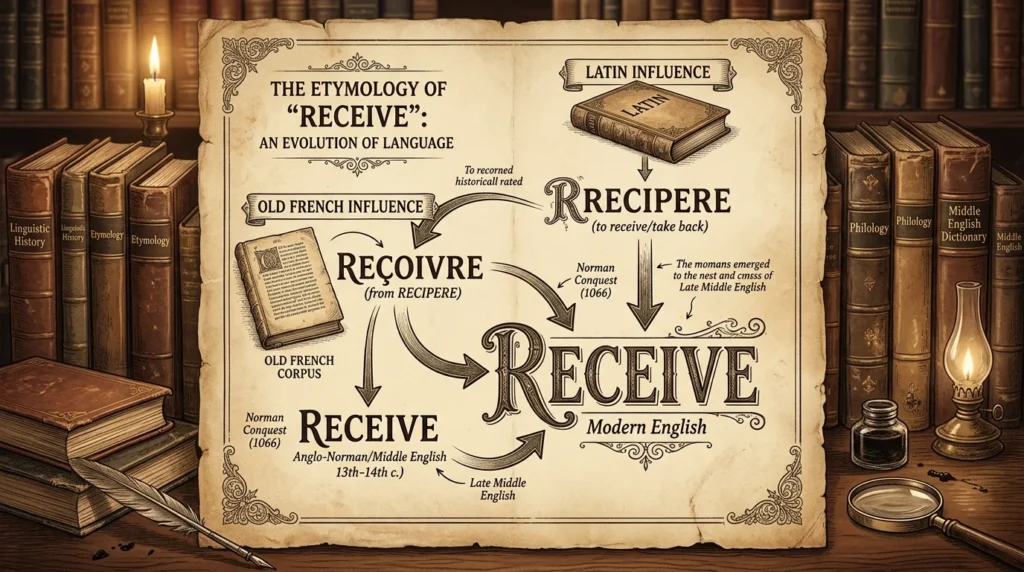
Over time, the spelling became fixed as receive. English dictionaries, schools, businesses, and official writing all use this spelling.
Because the letters e and i are placed together, many people accidentally reverse them and write recieve. This mistake has been common for many years.
One reason people remember the spelling is a famous rule:
“I before E, except after C.”
Since the word has the letter c before the vowel pair, the correct spelling becomes:
receive
Not:
recieve
While this rule does not work for every English word, it works perfectly for receive.
The Difference Between Receive and Recieve
The difference is actually very simple.
Receive
Receive is the correct English word.
It means:
- To get something
- To accept something
- To be given something
Examples:
- I received a letter today.
- She will receive her certificate tomorrow.
- We received good news.
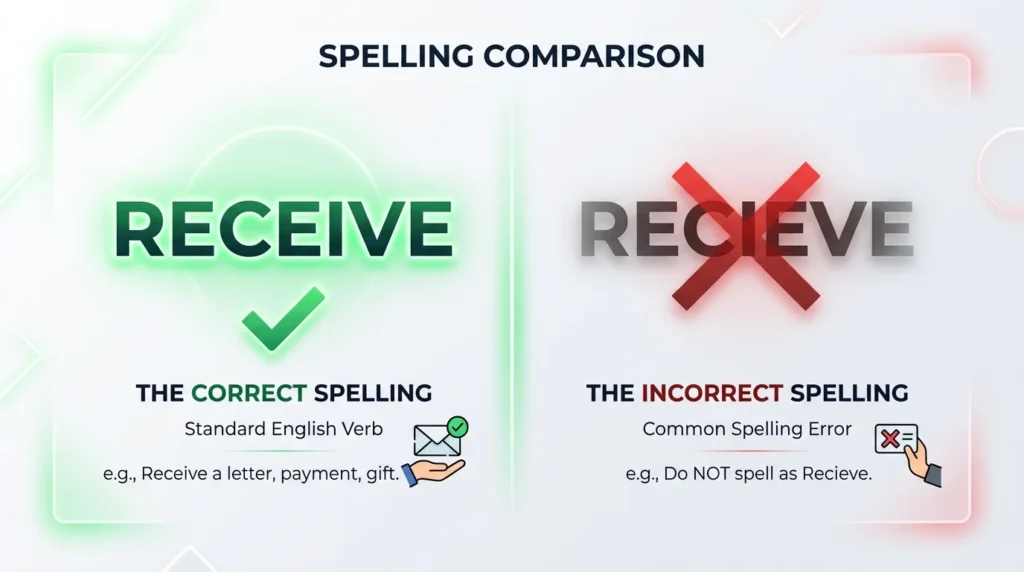
Recieve
Recieve is not a correct English spelling.
It is simply a spelling error that happens when the letters e and i are placed in the wrong order.
Examples:
- ❌ I recieved your email.
- ❌ They will recieve the package.
These sentences should use receive instead.
Comparison Table
| Feature | Receive | Recieve |
| Correct spelling | Yes | No |
| Found in dictionaries | Yes | No |
| Accepted in school writing | Yes | No |
| Accepted in business writing | Yes | No |
| Means “to get something” | Yes | No |
| Should you use it? | Yes | No |
Which One to Use and When Receive or Recieve
Always use receive.
There is no situation where recieve is the preferred spelling.
When Talking About Getting Something
- I received a gift.
- We received the package.
When Talking About Emails
- Did you receive my email?
- I received your message this morning.

When Talking About Money
- She received her payment.
- They received a refund.
When Talking About Information
- We received the news yesterday.
- He received instructions from his teacher.
In every situation, the correct spelling remains receive.
Common Mistakes People Make for Receive or Recieve
Many learners make the same spelling mistakes.
Mixing Up the Letters
The most common error is writing:
- ❌ recieve
Instead of:
- ✅ receive
Forgetting the “After C” Rule
People often remember “I before E” but forget the second part:
“Except after C.”
Since receive contains the letter c, the correct order becomes ei.

Typing Too Quickly
Fast typing can lead to spelling mistakes.
For example:
- Correct: receive
- Mistake: recieve
Always take a quick look before sending important messages or assignments.
Assuming Both Spellings Are Acceptable
Some learners believe both spellings are correct.
This is not true.
Only receive is accepted in standard English.
Everyday Real Life Examples of Receive or Recieve
Emails
- I received your email yesterday.
- Have you received the attachment?
- We received your application successfully.
News
- The company received an award.
- The town received heavy rainfall.
- The athlete received a medal.
Social Media
- Thanks! I received your message.
- I just received exciting news.
- She received thousands of likes on her post.

Daily Conversations
- Did you receive my text?
- We received the package this morning.
- He received help from a friend.
School and College
- Students received their grades.
- I received feedback from my teacher.
- She received a scholarship.
Work and Business
- We received the payment.
- The office received several requests.
- They received a new shipment.
Short Learning Section for Students and Beginners of Receive or Recieve
Here are some easy tricks to remember the correct spelling.
Trick 1: Remember the Rule
Think:
I before E, except after C.
The word contains c, so write:
receive
Trick 2: Focus on “cei”
Look at this part:
recei-ve
The letters after c are:
e + i
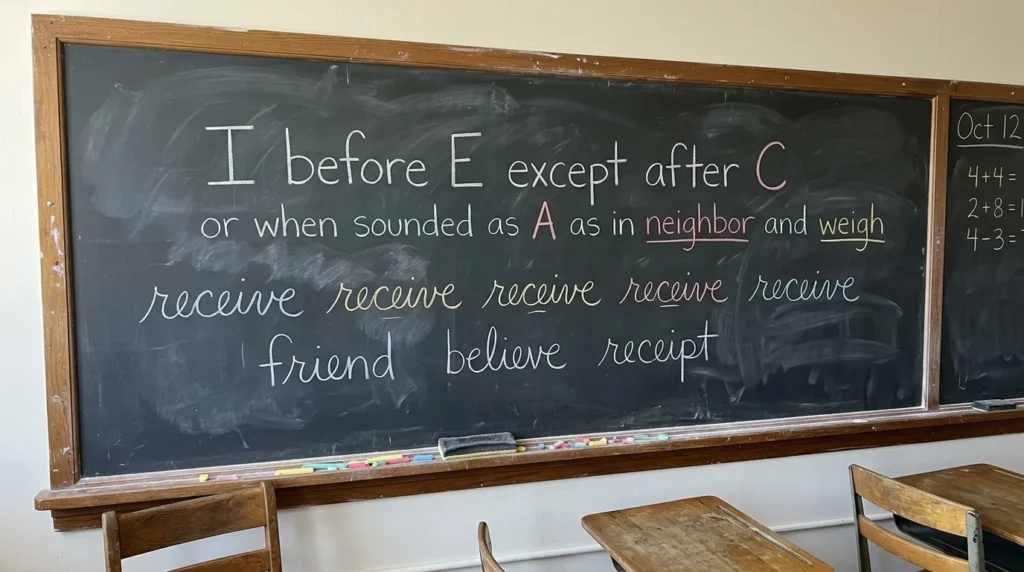
Trick 3: Practice the Word
Write the word several times:
- receive
- receive
- receive
- receive
Simple repetition helps your brain remember it.
Trick 4: Use It in Sentences
Practice with your own examples:
- I received a gift.
- We received good news.
- She received a certificate.
The more you use the word, the easier it becomes to spell.
FAQ
Is receive or recieve correct?
Receive is correct. Recieve is a spelling mistake.
Why do people write “recieve”?
People often switch the positions of e and i because the letters appear together.
Is “recieve” in the dictionary?
No. Standard dictionaries list receive, not recieve.
What does receive mean?
It means to get, accept, or be given something.
How can I remember the spelling?
Remember the rule:
“I before E, except after C.”
Because there is a c in the word, use ei.
Is received spelled with “ei” too?
Yes.
Examples:
- receive
- received
- receiving
- receiver
All use the same spelling pattern.
Can native English speakers misspell receive?
Yes. Even native speakers sometimes accidentally write recieve.
Is receive used in formal writing?
Yes. It is the correct spelling for school work, business writing, emails, reports, and everyday communication.
Conclusion
The confusion between receive and recieve is very common, but the answer is simple. Receive is the correct spelling, while recieve is always a mistake.
Whenever you mean “to get something,” use receive. A helpful way to remember it is the rule “I before E, except after C.” Since the word contains the letter c, the correct order is ei.
With a little practice, you will quickly remember the right spelling and avoid this common mistake in emails, school assignments, social media posts, and everyday writing.