Many English learners find was and were confusing because both words talk about the past. They are forms of the verb “to be”, but they are used with different subjects.
For example:
- I was happy.
- They were happy.
Both sentences are correct, but the verb changes depending on who or what is being talked about.
The good news is that the difference is actually very simple. Once you learn a few basic rules, choosing between was and were becomes much easier.
Quick Answer
Here is the easiest way to remember it:
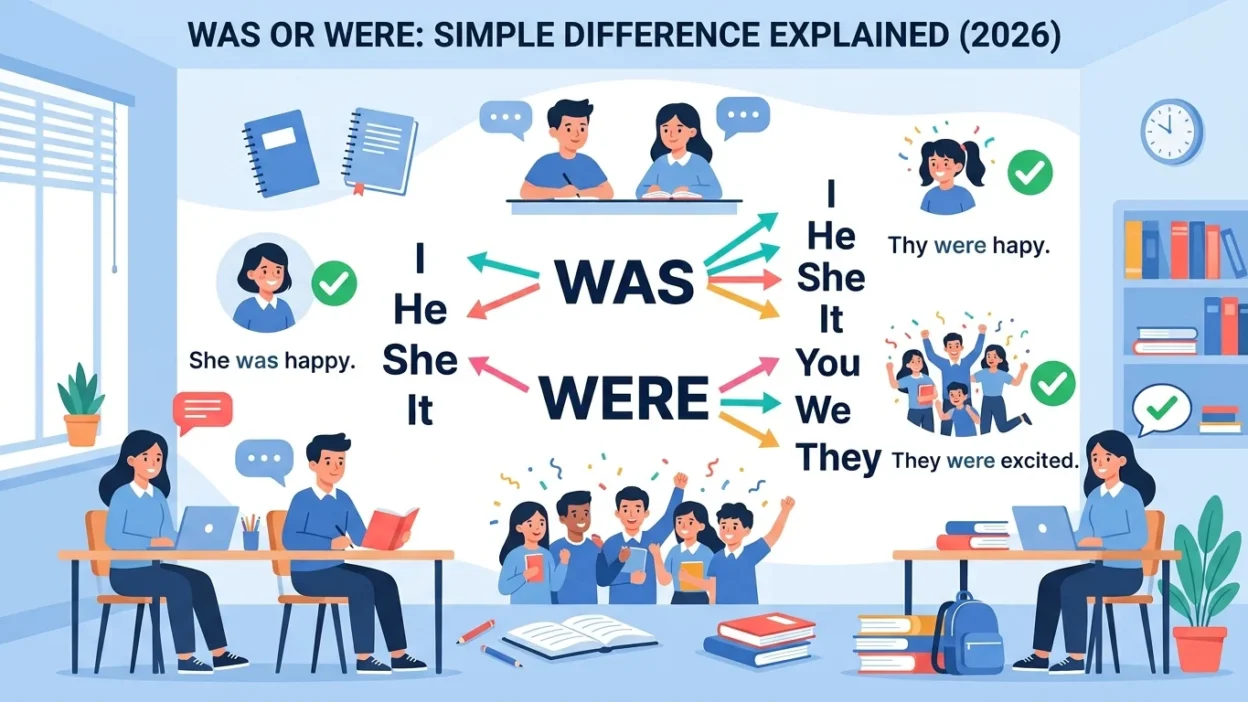
- Was is used with I, he, she, it, and singular nouns.
- Were is used with you, we, they, and plural nouns.
Examples:
- I was tired.
- He was late.
- The dog was hungry.
- You were right.
- We were busy.
- They were excited.
- The students were happy.
A simple memory trick:
- One person or thing = was
- More than one person or thing = were
Origin and Background of “Was” and “Were”
The words was and were come from the verb to be, one of the oldest verbs in the English language.
The verb to be changes depending on time.
Present tense:
- I am
- You are
- He is
- She is
- It is
- We are
- They are
Past tense:
- I was
- You were
- He was
- She was
- It was
- We were
- They were
So, was and were simply help us talk about things that happened in the past.
Difference Between Was and Were
The main difference is the subject that comes before the verb.
Use “Was” With Singular Subjects
Use was when talking about:
- I
- He
- She
- It
- One person
- One thing
Examples:
- I was at home.
- He was sick.
- She was happy.
- It was cold.
- The teacher was kind.
- My phone was broken.
Use “Were” With Plural Subjects
Use were when talking about:
- You
- We
- They
- More than one person
- More than one thing
Examples:
- You were late.
- We were ready.
- They were excited.
- The children were playing.
- The books were on the table.
Comparison Table
| Subject | Correct Form | Example |
| I | Was | I was tired. |
| He | Was | He was busy. |
| She | Was | She was happy. |
| It | Was | It was raining. |
| Singular noun | Was | The car was new. |
| You | Were | You were correct. |
| We | Were | We were friends. |
| They | Were | They were hungry. |
| Plural noun | Were | The students were ready. |
Which One to Use and When
Choosing the correct word becomes easy when you look at the subject.
When to Use “Was”
Use was when the subject is singular.
Examples:
- The baby was sleeping.
- My brother was at school.
- The movie was interesting.
- The weather was nice.
When to Use “Were”
Use were when the subject is plural.
Examples:
- The players were tired.
- The teachers were helpful.
- The flowers were beautiful.
- The dogs were barking.
Special Rule for “You”
Many learners expect you was, but this is incorrect.
Always use:
- You were right.
- You were late.
- You were amazing.
Never use:
- ❌ You was right.
Special Rule for Imaginary Situations
Sometimes were is used even with singular subjects when talking about imaginary situations.
Examples:
- If I were rich, I would travel the world.
- If he were here, he would help us.
This rule is common in formal English.
Common Mistakes People Make
Learning from mistakes can help you improve faster.
Using “Were” With Singular Subjects
Incorrect:
- ❌ He were tired.
- ❌ My sister were happy.
Correct:
- ✅ He was tired.
- ✅ My sister was happy.
Using “Was” With Plural Subjects
Incorrect:
- ❌ They was excited.
- ❌ The students was ready.
Correct:
- ✅ They were excited.
- ✅ The students were ready.
Forgetting the Rule for “You”
Incorrect:
- ❌ You was late.
Correct:
- ✅ You were late.
Mixing Singular and Plural Subjects
Incorrect:
- ❌ The books was expensive.
Correct:
- ✅ The books were expensive.
Everyday Real Life Examples
In Emails
- I was unable to attend the meeting.
- We were happy to receive your message.
- You were included in the email list.
In News Reports
- The road was closed yesterday.
- Several buildings were damaged during the storm.
- The event was successful.
On Social Media
- I was so excited today!
- We were at the concert last night.
- They were having a great time.
In Daily Conversations
- I was busy yesterday.
- She was at work.
- We were at the mall.
- They were at home.
At School
- The lesson was interesting.
- The students were quiet.
- The teacher was helpful.
Learning Tips for Students and Beginners
Here are some easy tricks to remember the difference.
Remember the Simple Pattern
Was
- I
- He
- She
- It
- One person
- One thing
Were
- You
- We
- They
- More than one person
- More than one thing
Practice With Questions
Ask yourself:
“Am I talking about one person or thing?”
If yes:
- Use was
If not:
- Use were
Read and Listen
Pay attention when reading books, watching videos, or listening to English speakers.
Notice sentences like:
- I was there.
- We were there.
Over time, the correct form will start to feel natural.
Make Your Own Sentences
Practice every day.
Examples:
- I was happy.
- My friend was excited.
- We were ready.
- They were late.
The more you practice, the easier it becomes.
Frequently Asked Questions
Is “I were” correct?
Usually, no.
Correct:
- I was tired.
However, in imaginary situations, you may hear:
- If I were rich, I would travel.
Is “you was” correct?
No.
Always use:
- You were right.
- You were happy.
Why do we say “they were”?
Because they is plural.
Example:
- They were at the park.
Can a singular noun use “were”?
Usually no.
However, formal imaginary sentences may use were:
- If she were here, she would help.
Is “the dog was” correct?
Yes.
Dog is singular.
Example:
- The dog was sleeping.
Is “the dogs were” correct?
Yes.
Dogs is plural.
Example:
- The dogs were barking.
Which is more common, “was” or “were”?
Both are common. The correct choice depends on the subject.
How can I remember the difference quickly?
Remember:
- One = was
- More than one = were
This simple rule works in most situations.
Conclusion
Understanding was and were is easier than many learners think. Both words are past forms of the verb to be, but they are used with different subjects.
Use was with singular subjects such as I, he, she, it, and singular nouns.
Use were with you, we, they, and plural nouns.
A simple rule to remember is:
- One person or thing = was
- More than one person or thing = were
With regular practice and real life examples, choosing the correct word will soon become natural and automatic.