Many English learners, students, and even native speakers become confused when they see the words saviour and savior. At first glance, they look different because one has a “u” and the other does not.
This often leads people to ask questions such as:
- Which spelling is correct?
- Is one spelling wrong?
- Should I use saviour or savior in writing?
- Do they have different meanings?
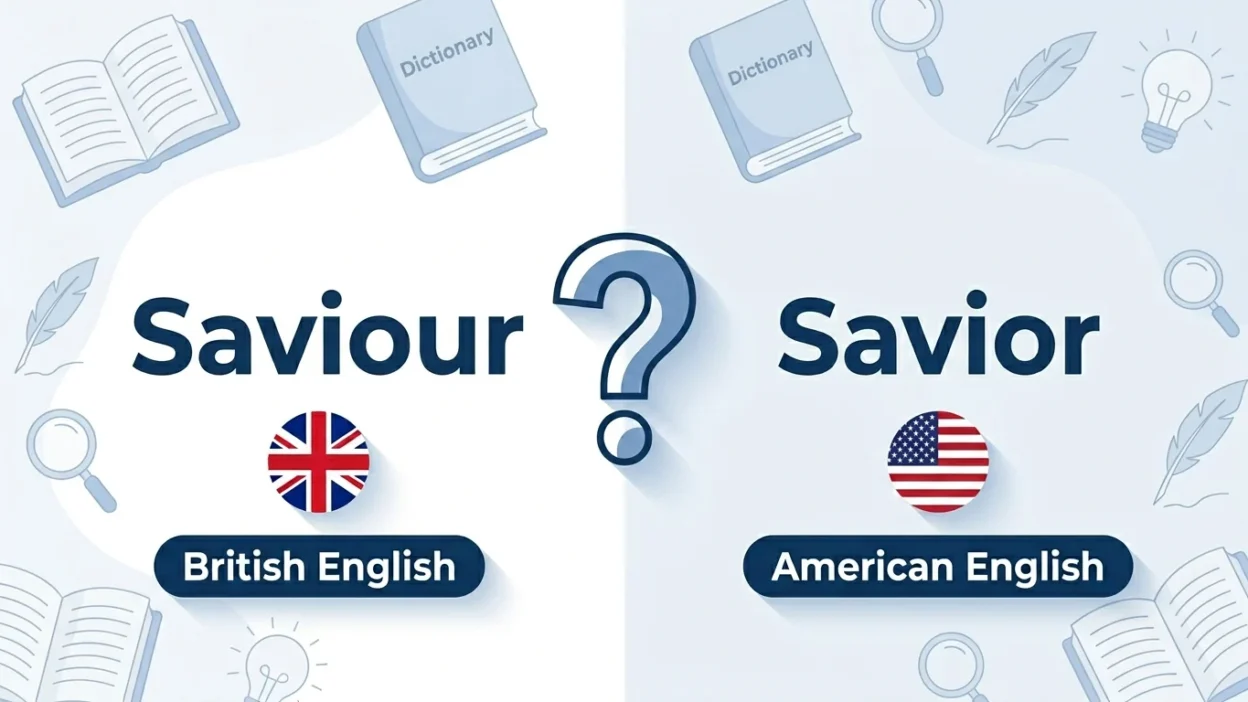
The good news is that both words are correct. They mean exactly the same thing. The difference is mainly based on the type of English being used.
This guide explains everything in simple language so you can understand the difference quickly and use the right spelling with confidence.
Quick Answer
- Saviour and savior have the same meaning.
- Both words refer to a person who saves, rescues, or helps others.
- Saviour is the preferred spelling in British English.
- Savior is the preferred spelling in American English.
- Neither spelling is wrong.
- Choose the spelling that matches the English style you are using.
Simple Rule
- Writing for the United States? → Savior
- Writing for the United Kingdom, Canada, Australia, or many other countries? → Saviour
Origin and Background of the Word
The word comes from an older word meaning to save or to rescue.
Over time, English developed different spelling styles in different parts of the world. This is why some words have two common spellings today.
For example:
| British English | American English |
| Colour | Color |
| Favourite | Favorite |
| Honour | Honor |
| Saviour | Savior |
The meaning stayed the same, but the spelling changed depending on the region.
This is a common pattern in English and not something unique to the word “saviour.”
What Is the Difference Between Saviour and Savior?
The main difference is the spelling.
Saviour
Saviour is the traditional British English spelling.
It is commonly used in:
- The United Kingdom
- Australia
- New Zealand
- South Africa
- Many Commonwealth countries
Example:
The firefighter was called a saviour after rescuing the family.
Savior
Savior is the American English spelling.
It is commonly used in:
- The United States
Example:
The firefighter was called a savior after rescuing the family.
Meaning Is Exactly the Same
Whether you write saviour or savior, the meaning does not change.
Both words can describe:
- Someone who rescues another person
- Someone who solves a serious problem
- A hero
- A religious figure who brings salvation
The choice depends on the spelling style you follow.
Comparison Table
| Feature | Saviour | Savior |
| Meaning | A person who saves or rescues | A person who saves or rescues |
| Correct spelling? | Yes | Yes |
| English type | British English | American English |
| Used in UK | Yes | Rarely |
| Used in USA | Rarely | Yes |
| Pronunciation | Same | Same |
| Definition | Same | Same |
| Religious use | Yes | Yes |
Important Note
You pronounce both words the same way.
The difference exists only in writing.
Which One Should You Use and When?
The best choice depends on your audience.
Use “Saviour” When
You are writing for:
- British readers
- Australian readers
- Canadian readers (often preferred)
- International organizations that use British English
Examples:
- School assignments using British English
- UK newspapers
- British books
- Academic work following British spelling
Use “Savior” When
You are writing for:
- American readers
- American schools
- American businesses
- US publications
Examples:
- American essays
- US news articles
- Business writing in the United States
Stay Consistent
One of the biggest writing rules is consistency.
If you choose saviour, use it throughout the entire document.
If you choose savior, use it throughout the entire document.
Avoid switching between the two spellings in the same piece of writing unless there is a special reason.
Common Mistakes People Make
Many learners make small mistakes when using these words.
Mixing British and American Spelling
Incorrect:
The savior became everyone’s favourite hero.
This sentence mixes American spelling (savior) with British spelling (favourite).
Better:
British English:
The saviour became everyone’s favourite hero.
American English:
The savior became everyone’s favorite hero.
Thinking One Spelling Is Wrong
Some people believe only one spelling is correct.
This is not true.
Both spellings are accepted in standard English.
Changing Spellings Randomly
Incorrect:
The saviour rescued the group. Later, the savior was interviewed.
Choose one style and keep it consistent.
Assuming the Meaning Changes
The meaning remains exactly the same.
Only the spelling changes.
Everyday Real Life Examples
In Emails
British English:
Thank you for helping us during the emergency. You were a real saviour.
American English:
Thank you for helping us during the emergency. You were a real savior.
In News Articles
British style:
Local residents called the doctor their saviour.
American style:
Local residents called the doctor their savior.
On Social Media
British English:
My brother was my saviour when my car broke down.
American English:
My brother was my savior when my car broke down.
In Daily Conversations
People often use the word to describe someone who helped them.
Examples:
- You are my saviour for bringing those notes.
- She was our savior during the project.
- The rescue team became the villagers’ saviour.
- The teacher was a savior when the students needed help.
In Religious Writing
The word is often used with a religious meaning.
Examples:
- Christians refer to Jesus as their Saviour.
- Many American churches use the spelling Savior.
The meaning remains the same regardless of spelling.
Learning Section for Students and Beginners
A simple way to remember the difference is to focus on the letter “u.”
Remember This Trick
British English likes the letter “u.”
Examples:
- Colour
- Favourite
- Honour
- Saviour
American English often removes the “u.”
Examples:
- Color
- Favorite
- Honor
- Savior
Easy Memory Sentence
If you use British English, keep the “u.” If you use American English, remove the “u.”
Practice Exercise
Choose the correct spelling.
- The doctor was my ______ after the accident.
- Many Americans write ______.
- Many British writers use ______.
Answers:
- Savior or saviour (both can be correct depending on style)
- Savior
- Saviour
FAQ
Is saviour correct?
Yes. Saviour is the standard British English spelling.
Is savior correct?
Yes. Savior is the standard American English spelling.
Do saviour and savior mean different things?
No. They have exactly the same meaning.
Which spelling is more common?
It depends on the country. Savior is more common in the United States, while saviour is more common in the United Kingdom and many Commonwealth countries.
How do you pronounce saviour and savior?
They are pronounced the same way.
Can I use either spelling in school?
Usually yes, but you should follow the spelling style required by your teacher, school, or writing guide.
Why does saviour have a “u”?
British English kept the “u” in many words, while American English removed it from several spellings.
Which spelling should ESL learners use?
Use whichever English style you are learning. If you study American English, use savior. If you study British English, use saviour.
Conclusion
The difference between saviour and savior is simple. They have the same meaning, the same pronunciation, and the same use. The only difference is spelling.
- Saviour is the British English form.
- Savior is the American English form.
Neither spelling is wrong. The best choice depends on your audience and the type of English you are using. Once you choose a spelling style, stay consistent throughout your writing.
Remember: same word, same meaning, different spelling. Understanding this simple rule will help you use saviour and savior correctly in school, work, and everyday writing.