Many English learners and even native speakers get confused between the words “lite” and “light.” They look similar, sound similar, and are often used in similar situations. Because of this, people are not always sure which one is correct.
The confusion becomes bigger because both words can appear on product labels, in messages, in social media posts, and even in brand names. Sometimes “lite” seems like a simple spelling mistake of “light,” but in many cases, it is used on purpose.
This article will explain everything in a very simple way so you can clearly understand the difference and never feel confused again.
Quick Answer: Simple Meaning of Lite vs Light
Here is the easiest way to understand both words:
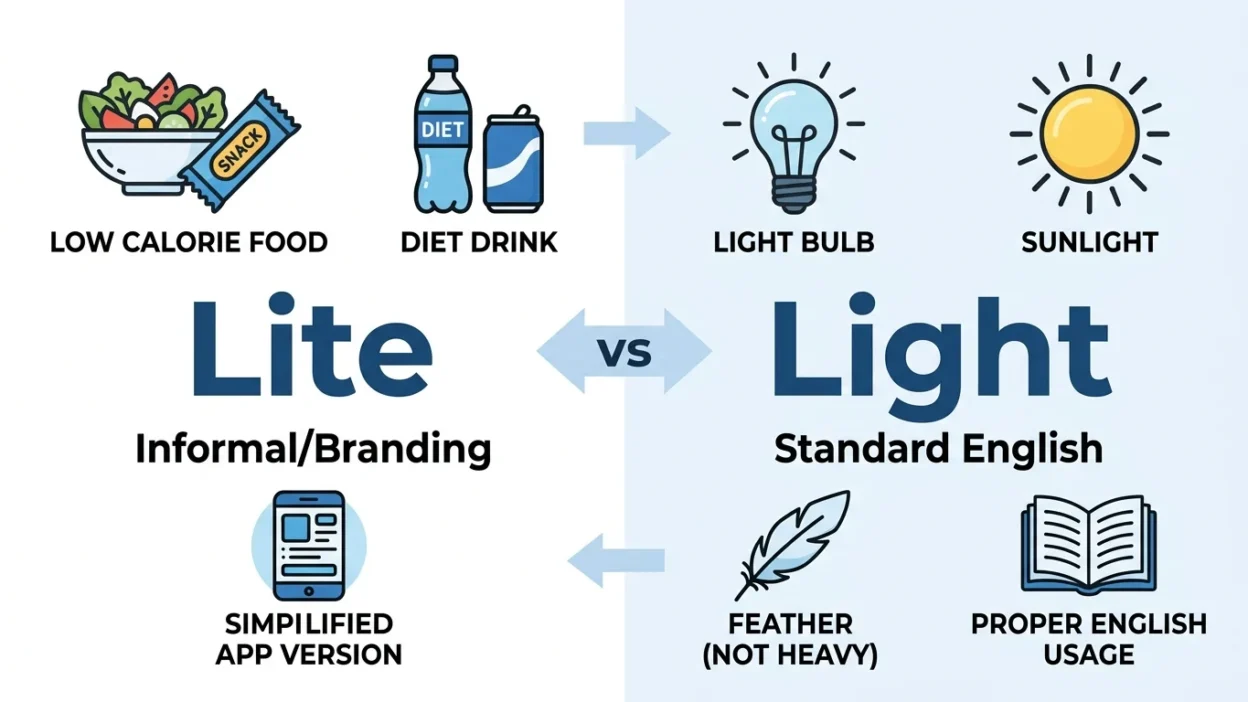
- Light
- The correct standard English word
- Means not heavy, bright, or having low weight or brightness
- Used in formal and everyday English
- Lite
- An informal, modern spelling of “light”
- Used mostly for marketing or branding
- Often means “low in something” (like sugar, calories, or strength)
👉 Simple idea:
- Light = correct grammar word
- Lite = casual or commercial version of “light”
Simple Origin or Background Explanation
The word “light” has been part of English for hundreds of years. It comes from old Germanic languages and has always had many meanings like brightness and low weight.
The word “lite” is much newer. It was created in modern times, mostly in advertising. Companies wanted a short and catchy spelling that looked simple and modern. So they started using “lite” instead of “light” on products.
For example:
- “Light beer” became “lite beer”
- “Low fat snacks” became “lite snacks”
Over time, “lite” became popular in branding and marketing language.
Clear Explanation of the Difference
Even though they look similar, their usage is different.
“Light” in English
The word “light” has several meanings:
- Not heavy (a light bag)
- Bright (light from the sun)
- Not dark (light room)
- Not strong (light flavor or light exercise)
It is a proper English word used in schools, books, exams, and daily communication.
“Lite” in English
The word “lite” usually means:
- A simplified or reduced version of something
- Lower in calories, sugar, fat, or strength
- Used in product names or brands
It is not used in formal writing like essays or exams.
Comparison Table: Lite vs Light
| Feature | Light | Lite |
| Correct spelling | Yes | No (informal use only) |
| Formal English | Yes | No |
| Common meaning | Not heavy, bright, low strength | Reduced version of something |
| Used in exams | Yes | No |
| Used in branding | Sometimes | Very common |
| Example | light bag, light room | diet soda, lite snacks |
Which One to Use and When
Choosing between “lite” and “light” depends on the situation.
Use “Light” when:
- Writing school essays
- Speaking or writing formal English
- Describing normal things
Examples:
- This box is very light.
- The room is full of light.
- I want a light meal.
Use “Lite” when:
- Talking about products or brands
- Reading labels on food or drinks
- Seeing modern marketing language
Examples:
- Diet soda (sometimes called “lite soda”)
- Lite yogurt
- Lite snacks
👉 Simple rule:
If you are writing normal English, always use light. If you see a product label, you might see lite.
Common Mistakes People Make
Many learners mix up these two words. Here are the most common mistakes:
Using “lite” in school writing
Some students write “lite” instead of “light” in essays. This is incorrect in formal English.
Thinking both words are equal
They are not equal. “Lite” is not a full replacement for “light.”
Overusing “lite” in daily writing
Some people think “lite” looks modern, so they use it in chats or emails. But it is still informal and should be used carefully.
Confusing meanings
People sometimes think “lite” always means “light in weight,” but it usually means “reduced version.”
Everyday Real Life Examples
Here is how you will see both words in real life:
Emails
- Correct: I need a light workload this week.
- Incorrect: I need a lite workload this week.
News or Articles
- Correct: The bag is very light and easy to carry.
- Incorrect: The bag is very lite and easy to carry.
Social Media
- You might see:
- “Try our new lite snack option!”
- “Feeling light and fresh today.”
Daily Conversation
- I prefer a light breakfast in the morning.
- This drink is a lite version with less sugar.
Food Packaging
- “Lite yogurt”
- “Lite mayonnaise”
- “Light butter” (sometimes both exist depending on branding)
Short Learning Section for Students and Beginners
If you are learning English, here is a very simple way to remember:
Think like this:
- Light = real English word
- Lite = short marketing word
Easy memory trick:
- “Light” has more letters → it is the full correct form
- “Lite” is shorter → used to look simple and catchy
Practice tip:
Try writing 5 sentences using “light” in different meanings:
- weight
- brightness
- food
- mood
- sound
This will help you understand the word deeply.
FAQ: Simple Questions and Answers
Is “lite” a correct English word?
Yes, but only in informal or branding use. It is not used in formal writing.
Can I use “lite” in school exams?
No. You should always use “light” in exams and academic writing.
Why do companies use “lite”?
Because it looks modern, short, and easy to remember for customers.
Does “lite” always mean low calories?
Mostly yes, but it can also mean reduced strength or simpler version.
Is “lite” the same as “light”?
No. “Lite” is an informal version, while “light” is the correct English word.
Can I replace “light” with “lite” everywhere?
No. You should only use “lite” in branding or product names, not in normal writing.
Which one should beginners learn first?
Always start with “light” because it is the correct and complete English word.
Is “lite” slang?
Not exactly slang, but it is informal marketing spelling.
Conclusion
The difference between “lite” and “light” is actually very simple once you understand it.
- Light is the correct English word used in all normal writing and speaking. It describes weight, brightness, or something not strong.
- Lite is a modern, informal spelling used mainly in product names and marketing to show something is reduced or simpler.
If you remember one rule, remember this:
👉 In normal English, always use light.
👉 In product labels, you might see lite.
With this simple understanding, you will never confuse them again, and your English will become clearer and more confident.