Many learners see the words “mold” and “mould” and think they are two different things. Some people even believe they have different meanings. This creates confusion, especially for students and ESL learners who are trying to improve their English.
The truth is simple: both words mean the same thing, but they are used in different types of English. One is more common in American English, and the other is used in British English.
This article will explain everything in a very clear and easy way so you never feel confused again.
Quick Answer
Here is the simplest explanation:
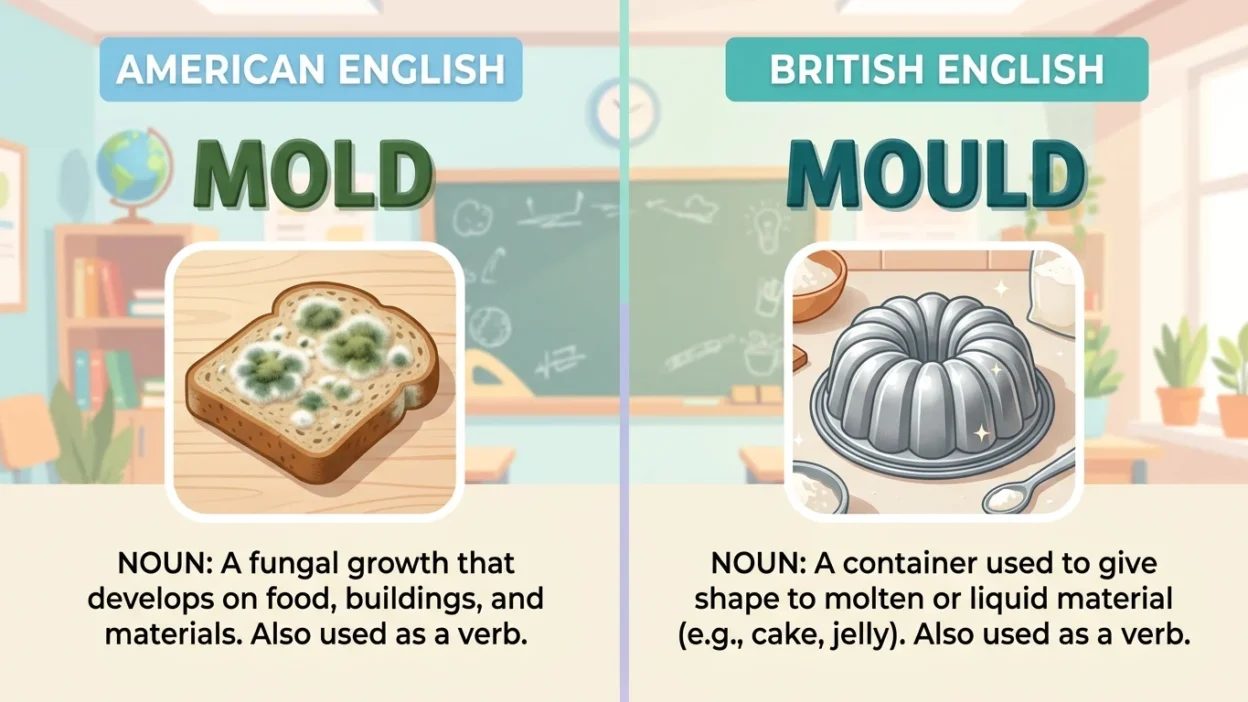
- Mold = American English spelling
- Mould = British English spelling
- Both words mean the same thing
- The meaning depends on context, not spelling differences
- You may also hear “mold/mould” used in different situations:
- A type of fungus (like on bread or walls)
- A shape used to form objects (like in cooking or building)
In short, only the spelling changes—not the meaning.
Simple Origin or Background
The difference between “mold” and “mould” comes from the history of English language development.
English spread to many countries over hundreds of years. As it spread, two main versions became common:
- American English (used in the United States)
- British English (used in the United Kingdom and many other countries)
American English often simplified spelling to make words shorter and easier. That is why:
- “Mould” became “mold”
- “Colour” became “color”
- “Favour” became “favor”
British English kept the older spellings, while American English changed some of them.
So, both spellings are correct, just used in different places.
Clear Explanation of the Difference
Even though the spelling is different, the meaning stays the same. Let’s break it into two main uses.
1. Mold/Mould as a Fungus
This is the most common meaning in daily life.
It refers to a soft, green, black, or white growth that appears on:
- Bread
- Fruits
- Walls
- Wet clothes
- Old food
It usually grows in warm and wet places.
Example:
- The bread has mold/mould on it.
- The bathroom wall has mold/mould because it is too wet.
2. Mold/Mould as a Shape
This meaning is also very common, especially in cooking and manufacturing.
It refers to a hollow shape used to form something.
Example:
- A cake is made using a mold/mould.
- Metal is poured into a mold/mould to make tools.
Key Idea
The meaning never changes. Only spelling depends on whether you use American or British English.
Comparison Table
Here is a simple table to understand the difference quickly:
| Feature | Mold | Mould |
| Type of English | American English | British English |
| Meaning | Same | Same |
| Used in countries | USA, Canada | UK, Australia, India (often) |
| Refers to fungus | Yes | Yes |
| Refers to shape | Yes | Yes |
| Spelling style | Shorter | Traditional |
Which One to Use and When
Choosing between “mold” and “mould” is actually very easy.
Use “Mold” if:
- You are writing in American English
- Your school uses American spelling
- You are writing for US readers
- You want simpler spelling style
Use “Mould” if:
- You are writing in British English
- Your school follows UK English rules
- You are writing for UK, Australia, or similar regions
Important Tip
You should not mix both spellings in the same text. Pick one style and stay consistent.
For example:
- Wrong: The bread has mold and mould on it
- Correct: The bread has mold on it (or mould on it)
Common Mistakes People Make
Many beginners make small mistakes when using these words. Here are the most common ones:
Thinking they are different meanings
Some people think “mold” is fungus and “mould” is shape. This is not true. Both words have both meanings.
Mixing spelling styles
Writing “mold” in one sentence and “mould” in another makes writing look confusing.
Overthinking the difference
Many learners spend too much time worrying about spelling. In reality, both are correct.
Using wrong English style
For example, using American spelling in a British English exam can sometimes lower marks.
Everyday Real Life Examples
Here are simple real life ways you may see or use these words.
Email Example
Work email:
- “We found mold/mould in the storage room. Please clean it immediately.”
News Example
- “Heavy rain caused mold/mould growth in old houses.”
Social Media Example
- “I forgot my bread in the kitchen and now it has mold/mould 😬”
Daily Life Example
- “This fruit is old. It has mold/mould on it.”
- “We used a cake mold/mould to make a birthday cake.”
These examples show how common the word is in everyday English.
Short Learning Section for Students and Beginners
If you are learning English, here is a simple way to remember:
Think like this:
- “Mold” = American English = shorter spelling
- “Mould” = British English = older spelling
Easy Memory Trick:
- USA = “O” removed → mold
- UK = full spelling kept → mould
Practice Tip:
Try writing 3 sentences using both words:
- One sentence using American English (mold)
- One sentence using British English (mould)
- One sentence where you choose only one style and stay consistent
This helps you remember faster.
FAQ: Common Questions
Is mold and mould the same thing?
Yes, both words have the same meaning. Only spelling is different.
Which spelling is correct?
Both are correct. It depends on whether you use American or British English.
What is mold/mould in food?
It is a type of fungus that grows on old or wet food.
Can mold/mould be dangerous?
Yes, some types can be harmful if eaten or breathed in.
Why are there two spellings?
Because English developed differently in the US and UK over time.
Should I learn both spellings?
Yes, but focus on one style first depending on your school or region.
Is mold used more than mould?
“Mold” is more common globally because American English is widely used online.
Can I mix both spellings?
It is better not to mix them in one piece of writing.
Conclusion
The difference between mold and mould is actually very simple. They are not different words in meaning. They are just two spellings of the same word used in different types of English.
- “Mold” is used in American English
- “Mould” is used in British English
- Both refer to fungus or a shape used for forming objects
Once you understand this, the confusion disappears completely. The most important thing is to stay consistent with one style when you write.
With this simple knowledge, you can now read, write, and understand both forms confidently without any confusion.