Many people get confused between molding and moulding because both words look almost the same and have the same meaning in many situations. The only real difference is usually the type of English being used.
You may see one spelling in books, another in movies, and a different one in emails or social media posts. This can make students, ESL learners, and even native speakers unsure about which spelling is correct.
The good news is that both words are correct. You simply need to know where and when each spelling is commonly used.
This guide explains everything in very simple English so you can understand the difference clearly and use the correct spelling with confidence.
Quick Answer
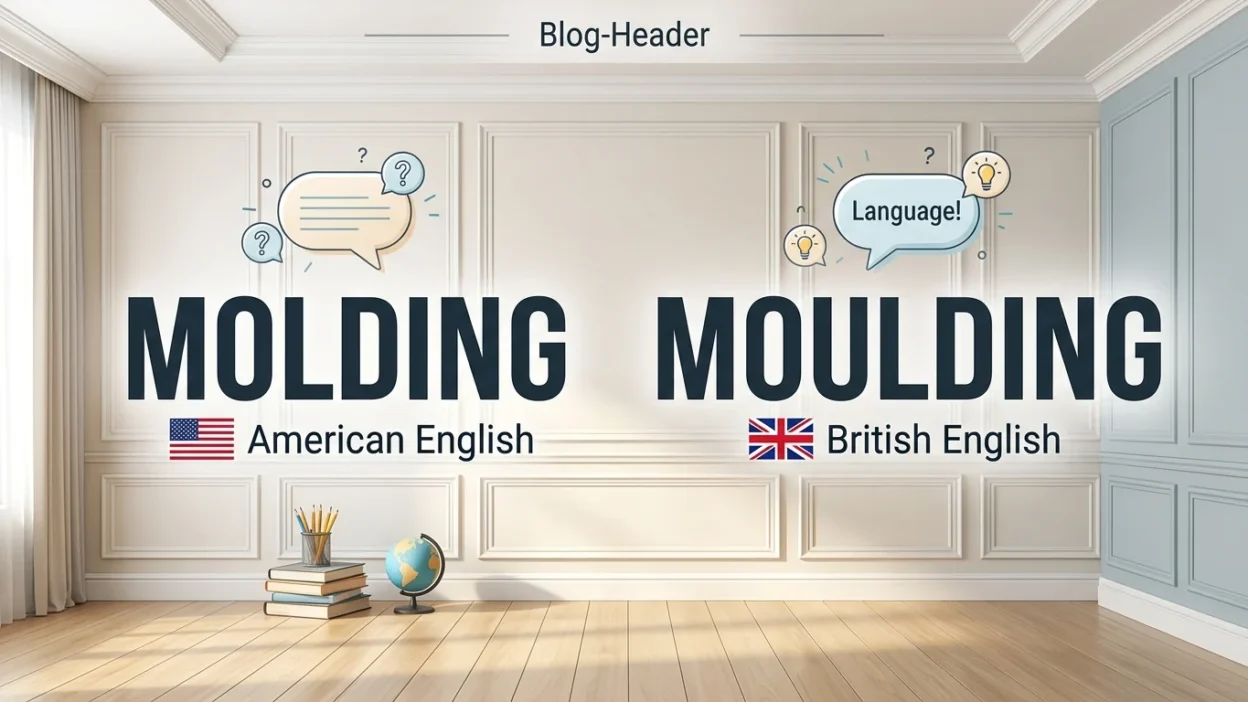
- Molding is the American English spelling.
- Moulding is the British English spelling.
- Both words usually have the same meaning.
- The choice depends on the country or style of English you are using.
Example:
- American English: The wall molding looks beautiful.
- British English: The wall moulding looks beautiful.
Both sentences are correct.
Simple Background of the Word
The word comes from old forms of English and French that were connected to the idea of shaping something.
Over time, English changed differently in different countries.
In American English:
Many words became shorter and simpler in spelling.
- color instead of colour
- favor instead of favour
- molding instead of moulding
In British English:
The older spelling style stayed more common.
- colour
- favour
- moulding
That is why both versions still exist today.
What Does Molding or Moulding Mean?
The word can have different meanings depending on the situation.
1. Decorative Building Material
This is the most common meaning.
It refers to decorative strips placed around:
- walls
- ceilings
- doors
- windows
Example:
- The white molding around the ceiling looks elegant.
2. The Process of Shaping Something
The word can also describe shaping material into a certain form.
This is common with:
- plastic
- clay
- metal
- chocolate
Example:
- The factory uses molding to make plastic bottles.
3. Cooking or Baking
Sometimes the word is connected to shaping food.
Example:
- The chef used a molding tray for the dessert.
The Main Difference Between Molding and Moulding
The meaning is usually the same. The main difference is spelling style.
American English
Use molding
Common in:
- United States
- American schools
- American newspapers
- American business writing
Example:
- The kitchen molding needs repair.
British English
Use moulding
Common in:
- United Kingdom
- Australia
- New Zealand
- many Commonwealth countries
Example:
- The wooden moulding was painted white.
Easy Comparison
| Feature | Molding | Moulding |
| Type of English | American English | British English |
| Correct spelling? | Yes | Yes |
| Meaning | Same | Same |
| Common in USA | Yes | Rare |
| Common in UK | Less common | Yes |
| Used in construction | Yes | Yes |
| Used in manufacturing | Yes | Yes |
Which One Should You Use?
The best choice depends on your audience and the type of English you are writing.
Use “molding” if:
- You are using American English
- You are writing for people in the United States
- Your school follows American spelling
- Your company uses American style
Use “moulding” if:
- You are using British English
- You are writing for readers in the UK
- Your school follows British spelling
- Your audience is in Australia or similar countries
Is One More Correct Than the Other?
No. Neither spelling is more correct.
Both are proper English words.
The important thing is to stay consistent.
Good Example:
If you write:
- color
- favorite
- molding
then you are using American English correctly.
If you write:
- colour
- favourite
- moulding
then you are using British English correctly.
Common Mistakes People Make
1. Mixing American and British Spelling
Many learners accidentally mix both styles in the same sentence or document.
Example:
- The colour of the molding looks nice.
This mixes British spelling (colour) with American spelling (molding).
It is better to keep one style throughout your writing.
2. Thinking One Version Is Wrong
Some people believe “moulding” is incorrect because they mainly see American English online.
Others think “molding” looks strange because they learned British English at school.
Actually, both are correct.
3. Confusing It With “Mold” or “Mould”
Another common mistake is confusing these words with:
- mold/mould (fungus)
- molding/moulding (shaping or decoration)
Example:
- There is mold on the bread. → fungus
- The door molding is broken. → decorative material
The meanings are different.
4. Using Different Spellings in Formal Writing
In essays, reports, or business documents, changing spellings can look careless.
Choose one style and use it everywhere.
Everyday Real Life Examples
Here are simple examples from daily life.
In an Email
- The office molding needs repainting.
- The office moulding needs repainting.
Both are correct depending on the English style.
In Home Decoration
- We added wooden molding around the windows.
- We added wooden moulding around the windows.
In Manufacturing
- Plastic molding is used to make toys.
- Plastic moulding is used to make toys.
On Social Media
American user:
- Love the new ceiling molding in my room!
British user:
- Love the new ceiling moulding in my room!
In News Writing
American newspaper:
- Historic building molding was restored.
British newspaper:
- Historic building moulding was restored.
Learning Section for Students and Beginners
Here is a simple trick to remember the difference.
Remember This:
| English Style | Spelling |
| American English | molding |
| British English | moulding |
Easy Memory Tip
Think about these pairs:
| American | British |
| color | colour |
| favorite | favourite |
| molding | moulding |
If British English adds “ou,” then “moulding” becomes easy to remember.
Practice Sentences
Fill in the blank with the correct spelling.
- The ceiling ______ looks beautiful.
- The factory uses plastic ______ machines.
- The old wooden ______ was repaired.
Possible answers:
- molding
- moulding
Both can work depending on the English style you choose.
FAQ
1. Is molding the same as moulding?
Yes. They usually mean the same thing. The difference is mainly American vs British spelling.
2. Which spelling is used in the United States?
“Molding” is the standard American English spelling.
3. Which spelling is used in the United Kingdom?
“Moulding” is the standard British English spelling.
4. Can I use both spellings in one article?
It is better not to mix them. Choose one style and stay consistent.
5. Is moulding old fashioned?
No. It is still widely used in British English today.
6. Does molding only mean decoration on walls?
No. It can also mean shaping materials like plastic, metal, or clay.
7. Which spelling should ESL learners use?
Use the spelling style your school, teacher, or audience prefers.
8. Will people understand both spellings?
Yes. Most English speakers understand both versions easily.
Conclusion
The difference between molding and moulding is simple once you understand the spelling styles.
- Molding = American English
- Moulding = British English
The meaning is usually the same, whether you are talking about home decoration, manufacturing, or shaping materials.
The most important thing is consistency. If you choose American English, use American spellings throughout your writing. If you choose British English, stay with British spellings.
Once you know this simple rule, the confusion disappears and both words become easy to use.