
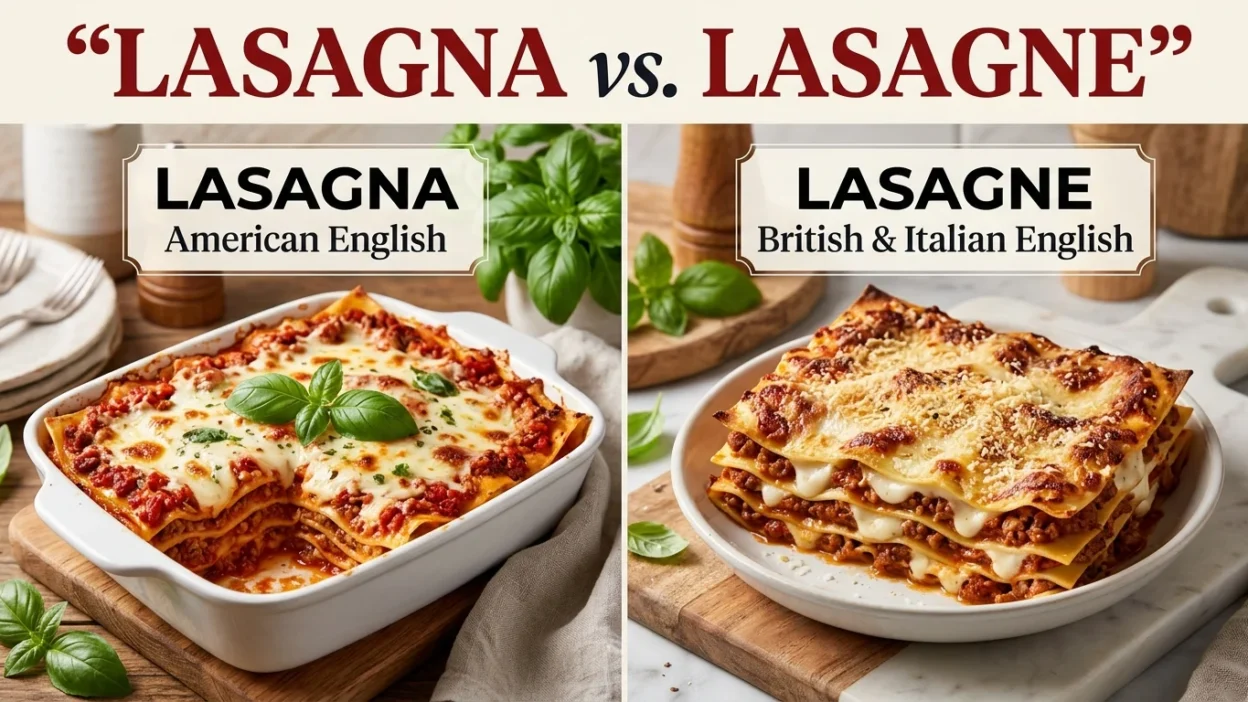
When you look at an Italian food menu or search for a favorite pasta recipe, you may notice two spellings: lasagna and lasagne. Both words refer to the popular Italian dish made with layers of pasta, sauce, cheese, and other delicious ingredients. But why are there two different spellings? Is one correct, or do they have different meanings?
The difference between lasagna and lasagne mainly comes from language and regional spelling conventions. Lasagna is the standard spelling in American English, while lasagne is commonly used in British English and Italian.
Both spellings describe the same layered pasta dish, although the Italian word can also refer to the individual pasta sheets. Understanding this small spelling difference can help you write correctly, understand recipes, and communicate clearly when discussing Italian food.
(Q.A): Lasagna vs. Lasagne
Lasagna and lasagne are two correct spellings of the same popular Italian pasta dish. Lasagna is preferred in American English, while lasagne is common in British English and Italian. Both describe a baked dish made with pasta sheets, cheese, sauce, and other ingredients. The main difference is regional spelling, not the food itself.
Why Do People Confuse Lasagna and Lasagne?
People often confuse lasagna and lasagne because the two words look almost identical and describe the same food.
The difference comes from their use in different languages and English-speaking regions.
There are three main reasons for this confusion:
- Regional spelling: American English generally uses lasagna, while British English commonly uses lasagne.
- Italian influence: Lasagne is the traditional Italian spelling of the dish’s name.
- Similar pronunciation: Both spellings are generally pronounced the same way in English.
For example:
- American English: I made homemade lasagna for dinner.
- British English: We had homemade lasagne for dinner.
Both sentences are correct. The spelling simply reflects the variety of English being used.
First Word: What Does Lasagna Mean?
Lasagna is the American English spelling of a popular Italian baked pasta dish. It consists of several layers of wide, flat pasta sheets combined with ingredients such as tomato sauce, meat, cheese, and vegetables.
The dish is usually baked in an oven until the layers become hot, soft, and flavorful.
Origin and History of Lasagna
The word lasagna comes from Italian, with historical roots in the Latin word lasanum, which referred to a cooking pot or container.
Lasagna is closely associated with Italian cuisine, particularly the Emilia-Romagna region. Traditional recipes from this area often include layers of fresh egg pasta, meat-based ragù, béchamel sauce, and Parmigiano-Reggiano cheese.
Over time, different countries developed their own versions using local ingredients and cooking styles.
Examples of Lasagna in Sentences
- My mother makes delicious lasagna every Sunday.
- We ordered vegetable lasagna at the Italian restaurant.
- She added extra cheese to her homemade lasagna.
- The lasagna needs another ten minutes in the oven.
- I learned how to prepare lasagna from my grandmother.
In American English, lasagna is the spelling you should generally choose when writing about this dish.
Second Word: What Does Lasagne Mean?
Lasagne is the traditional Italian spelling of the dish and the commonly preferred spelling in British English.
In Italian, lasagne is the plural form of lasagna. It can refer to the flat pasta sheets used to prepare the dish or to the finished layered meal.
In British English, however, lasagne is commonly used as the name of the complete baked pasta dish.
Origin and History of Lasagne
The spelling lasagne comes directly from Italian culinary language. Italian recipes traditionally use the plural form because the dish contains multiple pasta sheets arranged in layers.
The word became familiar in British English through Italian food traditions, restaurants, cookbooks, and recipes.
Today, lasagne is widely recognized in the United Kingdom and other English-speaking regions that follow British spelling conventions.
Examples of Lasagne in Sentences
- We prepared a traditional Italian lasagne for dinner.
- The restaurant serves delicious beef lasagne.
- She bought fresh pasta sheets for her lasagne.
- My favorite meal is homemade vegetable lasagne.
- The lasagne was served with fresh garlic bread.
In British English, lasagne is generally the preferred spelling when referring to the baked pasta dish.
Lasagna vs. Lasagne: Comparison Table
The following table explains the main differences between the two spellings.
| Feature | Lasagna | Lasagne |
| Language origin | Italian | Italian |
| English usage | American English | British English |
| Meaning | Layered pasta dish | Layered pasta dish |
| Pronunciation | Usually the same | Usually the same |
| Spelling | Ends in A | Ends in E |
| Italian grammar | Singular form | Plural form |
| Food ingredients | Pasta, sauce, cheese | Pasta, sauce, cheese |
| Correctness | Correct | Correct |
Important: Neither spelling is wrong. The best choice depends on your audience and the English variety you are following.
When Should You Use Lasagna or Lasagne?
Choosing between lasagna and lasagne is simple once you understand your audience.
Use Lasagna in American English
Choose lasagna when writing for American readers, using American recipes, or following American spelling conventions.
Examples:
- I love eating homemade lasagna.
- The grocery store sells frozen lasagna.
- We ordered cheese lasagna for lunch.
- My favorite Italian meal is lasagna.
Use Lasagne in British English
Choose lasagne when writing for British readers or following British English spelling conventions.
Examples:
- We had beef lasagne for dinner.
- She prepared a delicious vegetable lasagne.
- The café offers homemade lasagne.
- I bought a ready-made lasagne from the supermarket.
Use Italian Spelling When Writing in Italian
If you are writing in Italian, use the appropriate grammatical form:
- Lasagna is singular.
- Lasagne is plural.
For example, una lasagna means one lasagna, while le lasagne refers to lasagne in the plural.
15 Examples of Lasagna and Lasagne in Sentences
These examples show how both spellings work in everyday English.
Examples Using Lasagna
- My family enjoys eating lasagna on special occasions.
- I prepared a delicious lasagna for my guests.
- The restaurant makes fresh lasagna every morning.
- She added mushrooms and spinach to her lasagna.
- Homemade lasagna tastes better than frozen pasta meals.
- We shared a large lasagna at the Italian restaurant.
- He followed an easy lasagna recipe from a cookbook.
- The cheese on top of the lasagna was perfectly melted.
Examples Using Lasagne
- My sister cooked a traditional Italian lasagne.
- We ordered beef lasagne at the local restaurant.
- The chef prepared vegetable lasagne with fresh ingredients.
- She served the lasagne with a green salad.
- I found a simple lasagne recipe online.
- The supermarket sells frozen lasagne.
- Everyone enjoyed the homemade lasagne at dinner.
These examples demonstrate that both words can describe the same meal. The spelling changes according to regional language preferences.
Common Mistakes When Using Lasagna and Lasagne
Although both spellings are correct, people sometimes make mistakes when choosing between them.
Here are some common errors to avoid.
1. Thinking One Spelling Is Incorrect
A common misunderstanding is believing that lasagna is correct and lasagne is wrong, or vice versa.
Correct understanding: Both spellings are accepted, but their regional preferences differ.
2. Mixing American and British Spelling
Using both spellings in the same article can make your writing inconsistent.
For example:
- Incorrectly inconsistent: We made lasagna yesterday, and today we are cooking lasagne.
- Better for American English: We made lasagna yesterday, and today we are cooking lasagna.
- Better for British English: We made lasagne yesterday, and today we are cooking lasagne.
3. Assuming They Are Different Dishes
Some people believe lasagna and lasagne are two separate Italian recipes.
Correct understanding: In English, both usually refer to the same layered pasta dish.
4. Confusing the Dish With Individual Pasta Sheets
In Italian, the singular and plural forms have a grammatical difference.
- Lasagna: One pasta sheet.
- Lasagne: Multiple pasta sheets.
In English, both spellings are commonly used for the complete dish.
Easy Memory Trick: How to Remember Lasagna vs. Lasagne
You can remember the difference with a simple spelling trick.
- Lasagna = America: Remember the letter A in both America and lasagna.
- Lasagne = Britain: Remember the E ending in lasagne as the common British spelling.
Another easy way to remember is:
A for American, E for English (British English).
This is a helpful memory trick for students and English learners.
Remember that this trick describes common spelling preferences, not an absolute rule. Both spellings can appear in different English-speaking countries.
American vs. British English: Lasagna or Lasagne?
American and British English sometimes use different spellings for the same words. Lasagna and lasagne are a good example of this difference.
In the United States, lasagna is the standard spelling used in restaurants, cookbooks, grocery stores, and everyday writing.
In the United Kingdom, lasagne is more commonly used in menus, recipes, newspapers, and conversations.
Here are some examples:
| American English | British English |
| Lasagna | Lasagne |
| Eggplant | Aubergine |
| Zucchini | Courgette |
| Cookie | Biscuit |
| Fries | Chips |
| Apartment | Flat |
These differences show how English spelling and vocabulary can change depending on the country.
If you are writing for an international audience, either lasagna or lasagne is understandable. However, maintaining one spelling throughout your content is a good writing practice.
Similar Words Related to Lasagna and Lasagne
Several Italian food terms are related to lasagna and lasagne. Learning these words can help you understand recipes, restaurant menus, and food conversations.
1. Pasta
Pasta is a food made from flour and water, sometimes with eggs. It comes in different shapes and sizes.
2. Spaghetti
Spaghetti is a long, thin type of Italian pasta commonly served with tomato sauce, meatballs, or other toppings.
3. Ravioli
Ravioli are small pasta parcels filled with ingredients such as cheese, meat, or vegetables.
4. Fettuccine
Fettuccine is a type of flat, ribbon-shaped pasta often served with creamy sauces.
5. Cannelloni
Cannelloni are large pasta tubes filled with ingredients such as cheese, spinach, or meat and usually baked with sauce.
6. Bolognese
Bolognese is a meat-based Italian sauce commonly served with pasta. It is also frequently used as a filling layer in lasagna.
7. Béchamel
Béchamel is a creamy white sauce made from butter, flour, and milk. It is traditionally used in many Italian lasagne recipes.
Final Verdict: Lasagna or Lasagne?
The correct choice depends on the type of English you are using.
Lasagna is the preferred spelling in American English, while lasagne is commonly used in British English and is the traditional Italian plural form.
Both words generally describe the same delicious baked pasta dish made with layers of pasta, sauce, cheese, and other ingredients.
If you are writing for an American audience, choose lasagna. If you are writing for a British audience, choose lasagne. Most importantly, stay consistent with your spelling throughout your writing.
(FAQs)
1. Is lasagna or lasagne the correct spelling?
Both lasagna and lasagne are correct spellings. Lasagna is commonly used in American English, while lasagne is preferred in British English. Both generally refer to the same layered Italian pasta dish.
2. What is the difference between lasagna and lasagne?
The main difference is regional spelling. Lasagna is the American English form, whereas lasagne is the British English form. In Italian, lasagna is singular and lasagne is plural.
3. Is lasagne British or American?
Lasagne is commonly used in British English. It is also the traditional Italian plural spelling of lasagna and is widely recognized in Italian food terminology.
4. Is lasagna American or Italian?
Lasagna is an Italian food with a long history in Italian cuisine. The spelling lasagna is also the standard form commonly used in American English.
5. Are lasagna and lasagne pronounced the same?
Yes, both spellings are generally pronounced the same way in English. The spelling difference does not usually create a difference in pronunciation.
6. Is lasagne plural in Italian?
Yes. In Italian, lasagne is the plural form of lasagna. It refers to multiple pasta sheets. However, British English commonly uses lasagne as the name of the complete baked dish.
7. Which spelling should I use in an English essay?
Use lasagna if you are following American English and lasagne if you are following British English. If your essay does not specify a variety, choose one spelling and use it consistently.
8. Do lasagna and lasagne have different ingredients?
No. The spellings do not indicate different ingredients or recipes. Both usually describe a layered pasta dish containing pasta sheets, sauce, cheese, and optional meat or vegetables.
Remember This
- Lasagna: Common American English spelling.
- Lasagne: Common British English spelling.
- Italian meaning: Lasagna is singular, while lasagne is plural.
- Pronunciation: Generally the same in English.
- Food: Both usually describe the same layered pasta dish.
The easiest way to remember the difference is Lasagna for American English and Lasagne for British English.
Conclusion
Understanding the difference between lasagna and lasagne is easy once you know their regional spelling preferences. Both words describe the same popular Italian layered pasta dish, but lasagna is commonly used in American English, while lasagne is preferred in British English. In Italian, the two forms also have a grammatical difference because lasagna is singular and lasagne is plural.
Whether you are writing an essay, reading an Italian recipe, or ordering food at a restaurant, both spellings are useful to recognize. Choose the spelling that matches your audience, keep your writing consistent, and enjoy learning more about English vocabulary through everyday words.