Many English learners and even native speakers often get confused between the words “cloths” and “clothes.” They look very similar, but they do not mean the same thing. The only difference is one small letter, yet the meaning changes completely.
This confusion happens because English spelling can be tricky. When two words look almost the same, it becomes easy to mix them up. Some people also pronounce them in a similar way, which adds more confusion.
In daily writing, students may accidentally use “cloths” when they mean “clothes,” or the other way around. This can change the meaning of a sentence and make it unclear.
In this article, you will learn the simple and clear difference so you never mix them up again.
Quick Answer: Simple Meaning Explained
Here is the easiest way to understand both words:
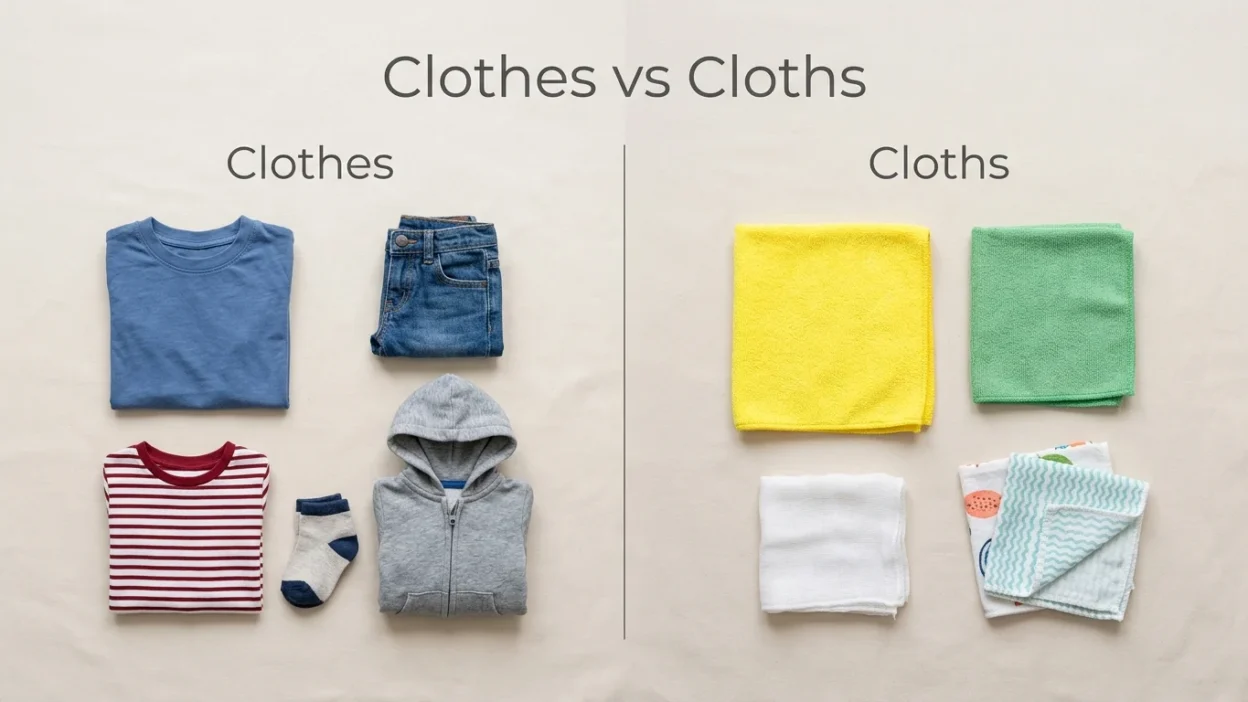
- Clothes means things you wear on your body
- shirts, pants, jackets, dresses, etc.
- Cloths means pieces of fabric or material
- used for cleaning, wiping, or making things
Very simple trick:
- If you can wear it → clothes
- If you can wipe or cut it → cloths
So:
- Clothes = wearable items
- Cloths = pieces of fabric
Simple Origin or Background
The word “cloth” is very old in English. It originally referred to a piece of fabric made from cotton, wool, or other materials. When people needed more than one piece, they used the word “cloths.”
On the other hand, “clothes” comes from an old English word related to covering the body. Over time, it became the standard word for everything people wear.
Even though both words look similar, they developed different meanings in English history.
This is why today:
- “cloths” = fabric pieces
- “clothes” = clothing items
Clear Explanation of the Difference
The main difference between cloths and clothes is in meaning and use.
Clothes (Wearable Items)
“Clothes” always refers to items you wear on your body. It is a general word for all types of dressing items.
Examples:
- T shirt
- Jeans
- Shirt
- Jacket
- Dress
You wear clothes every day to cover your body, stay warm, and look presentable.
Cloths (Pieces of Fabric)
“Cloths” refers to pieces of fabric that are not fully made into clothing. They are usually used for:
- Cleaning tables or surfaces
- Wiping dust
- Polishing objects
- Craft work or sewing
Examples:
- Cleaning cloth
- Dust cloth
- Wet cloth
So, cloths are not meant to be worn.
Comparison Table (Easy to Understand)
| Feature | Clothes | Cloths |
| Meaning | Things you wear | Pieces of fabric |
| Use | Dressing the body | Cleaning or making items |
| Type | Finished product | Raw or simple material |
| Example | Shirt, jeans, jacket | Cleaning cloth, dust cloth |
| Purpose | Fashion and protection | Cleaning or crafting |
| Can be worn? | Yes | No |
Which One to Use and When
Knowing when to use each word is very important.
Use “clothes” when:
- Talking about dressing
- Describing outfits
- Shopping for wearables
- Writing about fashion
Example sentences:
- I bought new clothes yesterday.
- She changed her clothes before going out.
- These clothes are very comfortable.
Use “cloths” when:
- Talking about cleaning
- Referring to fabric pieces
- Mentioning materials for sewing or crafts
Example sentences:
- I used clean cloths to wipe the table.
- The tailor cut the cloths into pieces.
- Keep these cloths in the kitchen.
Common Mistakes People Make
Many learners confuse these two words in writing and speaking.
Mistake 1: Using “cloths” for clothing
❌ I bought new cloths for school.
✔ I bought new clothes for school.
Mistake 2: Thinking both mean the same thing
Some people believe they are just spelling variations, but they are not.
Mistake 3: Incorrect pronunciation thinking
Even if they sound similar, their meanings are different, so context matters more than sound.
Mistake 4: Overusing “cloth” instead of “clothes”
Beginners sometimes forget the “e” at the end and write “cloths” by mistake.
Everyday Real Life Examples
Emails and Messages
- “Please pack your clothes for the trip.”
- “We need clean cloths for the kitchen.”
Wrong:
- “Bring your cloths for the wedding.” ❌
Social Media Posts
Correct:
- “New clothes, new style!”
Incorrect:
- “New cloths, new style!” (wrong meaning)
Daily Conversation
Example 1:
- A: “Where are my clothes?”
- B: “They are in the wardrobe.”
Example 2:
- A: “Do we have any cloths to clean the table?”
- B: “Yes, in the kitchen drawer.”
Shopping Situation
When shopping:
- You buy clothes from a clothing store.
- You buy cloths from a fabric or home supply shop.
Short Learning Section for Students and Beginners
Here is a simple way to remember:
Easy Memory Trick:
- Clothes = C for Covering your body
- Cloths = C for Cleaning surfaces
Practice Exercise:
Fill in the blanks:
- I need new ______ for winter.
- Use a wet ______ to clean the floor.
- She packed her ______ for the trip.
- The tailor bought new ______ for sewing.
Answers:
- clothes
- cloth
- clothes
- cloths
If you can answer these correctly, you understand the difference well.
FAQ: Common Questions and Answers
1. What is the main difference between cloths and clothes?
Clothes are things you wear, while cloths are pieces of fabric used for cleaning or making items.
2. Can I use cloths instead of clothes?
No, that would be incorrect. They have different meanings.
3. Why do people confuse these words?
Because they look similar in spelling and sound almost the same.
4. Is “cloths” used in fashion?
No, fashion uses “clothes,” not cloths.
5. What is a cloth in singular form?
A cloth is a single piece of fabric.
6. Are clothes always plural?
Yes, “clothes” is always used in plural form, even when referring to one outfit.
7. Can cloths mean clothing in any situation?
No, cloths never means clothing. It always means fabric pieces.
8. How can I remember the difference easily?
Think: clothes = wear, cloths = clean.
Conclusion
The difference between cloths and clothes is small in spelling but very big in meaning. Clothes are things you wear every day, while cloths are pieces of fabric used mainly for cleaning or crafting.
Once you remember the simple idea wear vs clean you will never confuse them again. English becomes much easier when you focus on meaning instead of just spelling.
Understanding small differences like this helps you become more confident in writing, speaking, and learning English in daily life.