Many students and job seekers feel confused when they hear the words “CV” and “resume.” Some people think they are the same thing. Others believe they are completely different documents with strict rules.
The confusion happens because different countries use these words in different ways. Also, schools, teachers, and online advice sometimes give mixed information.
The truth is simple, but it needs to be explained clearly. Once you understand it, you will never mix them up again.
Quick Answer
Here is the easiest way to understand CV and resume:
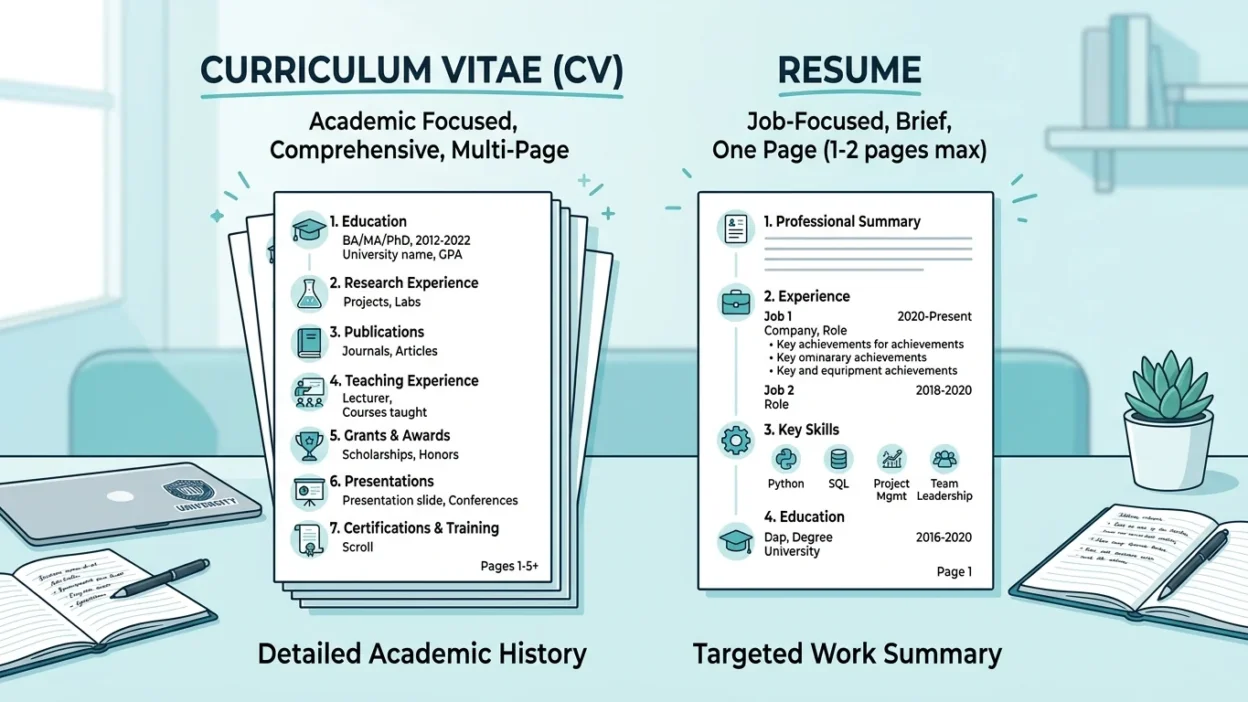
- A CV is a long document that shows your full life of education and work
- A resume is a short document that shows only important and recent details
- CV is mostly used for academic or research jobs in many countries
- Resume is used for most jobs in business and companies
- CV usually stays the same length or becomes longer over time
- Resume changes depending on the job you apply for
In short:
CV = full story of your life
Resume = short job summary
Simple Origin or Background Explanation
The word “CV” comes from Latin words meaning “life story.” That is why a CV is long and detailed. It is meant to show everything you have done in education, skills, and work.
The word “resume” comes from a French word that means “summary.” A resume is meant to be short and focused. It only shows what is most useful for a specific job.
Over time, different countries started using these words in different ways. That is why confusion exists today.
In some places, people use both words to mean the same thing. But in other places, they are clearly different documents.
Clear Explanation of the Difference
A CV and a resume are both documents used for jobs, but they are not the same in purpose and size.
A CV is like a full book about your education and career. It includes everything:
- School history
- College or university details
- All jobs you have done
- Skills and certifications
- Research, awards, and achievements
A resume is like a short introduction about you. It includes only the most important points:
- Recent education
- Most relevant job experience
- Key skills related to the job
- Short achievements
Another simple difference is:
- CV does not change much for different jobs
- Resume changes depending on the job you apply for
So, CV is detailed and fixed, while resume is short and flexible.
Comparison Table
Here is a simple table to understand the difference quickly:
| Feature | CV (Curriculum Vitae) | Resume |
| Length | Long (2–10 pages or more) | Short (1–2 pages) |
| Purpose | Full career history | Job specific summary |
| Detail level | Very detailed | Only important points |
| Changes for jobs | Usually same | Changes for each job |
| Common use | Academic, research, teaching | Corporate and general jobs |
| Focus | Entire life record | Skills for a specific job |
Which One to Use and When
Choosing between CV and resume depends on the job and country.
Use a CV when:
- You are applying for teaching jobs
- You want a research position
- You are applying in universities
- The job asks for full career details
Use a resume when:
- You are applying for company jobs
- You are applying for internships
- You want a short and clear profile
- The job posting asks for a resume
If you are unsure, always read the job instructions carefully. Most of the time, companies clearly say what they want.
Common Mistakes People Make
Many beginners make simple mistakes when preparing CVs and resumes. Here are the most common ones:
- Thinking CV and resume are always the same
- Making a resume too long like a CV
- Adding unnecessary personal details
- Using the same document for every job
- Not updating information regularly
- Writing in difficult or unclear English
- Adding too many skills that are not related to the job
Avoiding these mistakes can make your application much stronger.
Everyday Real Life Examples
Email Example
When applying for a job by email, people often write:
“I am sending my resume for the marketing assistant position.”
This means they are sending a short document with key details only.
Job Application Example
A university may say:
“Please submit your CV with your application.”
This means they want a detailed document showing your full education and experience.
Social Media Example
On professional platforms, people often say:
“My CV includes research papers and teaching experience.”
This shows a long academic record.
Daily Use Example
A student might say:
“I need to update my resume before applying for internships.”
This means they are preparing a short job focused document.
Short Learning Section for Students and Beginners
If you are new to job applications, here is an easy way to remember:
Think of CV as a full diary of your life.
Think of resume as a short message about your skills.
A CV tells everything from the beginning of your education to today.
A resume only tells what is important for the job you want right now.
If you are applying for your first job, start by making a simple resume first. Later, you can build a CV if needed for academic or long term career paths.
Always keep your document clear, clean, and easy to read.
FAQ Section
What is the main difference between CV and resume?
A CV is long and detailed, while a resume is short and focused on a specific job.
Can I use CV instead of resume?
It depends on the job. Some employers accept both, but many prefer one specific format.
How long should a resume be?
A resume is usually 1 to 2 pages long.
How long should a CV be?
A CV can be 2 pages or more and may grow as your career grows.
Do all countries use CV and resume the same way?
No, different countries use these terms in different ways, which causes confusion.
Which one is better for beginners?
A resume is usually better for beginners applying for simple jobs or internships.
Should I include all my experience in a resume?
No, only include experience that is related to the job you are applying for.
Is CV more detailed than resume?
Yes, a CV includes full details of education, work, and achievements.
Conclusion
Understanding CV and resume becomes easy once you know the simple idea behind them. A CV is a full record of your life achievements, while a resume is a short and focused summary for a specific job.
Both are important tools for job seekers, but they are used in different situations. If you keep the difference clear in your mind, you will always know which one to prepare.
The key is simple: keep CV detailed, and keep resume short and clear.