Many people feel confused about flakey and flaky because both words look almost the same and sound exactly alike. You may see one spelling on social media, in text messages, or even in online articles, while another spelling appears in dictionaries and school writing.
So which one is correct?
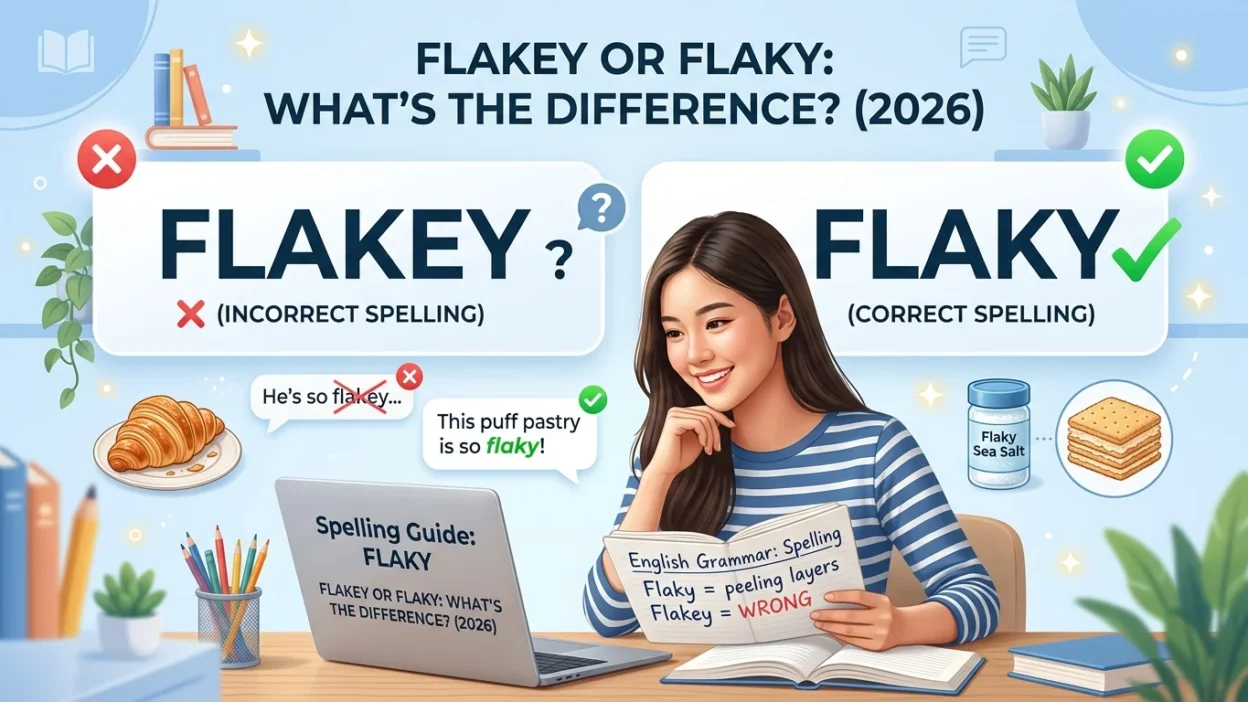
The short answer is simple: “flaky” is the standard and correct spelling in modern English. “Flakey” is usually seen as a less common alternative spelling.
This article will explain everything in very easy English so you can understand the difference clearly and use the right word with confidence.
Quick Answer
Here is the simple answer:
- Flaky = the standard and most accepted spelling
- Flakey = a less common alternative spelling
- Both words usually have the same meaning
- Most teachers, dictionaries, and professional writers prefer flaky
- In formal writing, school work, and business English, use flaky
Example:
- Correct and common: My friend is flaky because he cancels plans often.
- Less common: My friend is flakey because he cancels plans often.
Where Did These Words Come From?
Both words come from the noun flake.
A flake is a small thin piece that falls off something.
For example:
- snowflakes
- flakes of dry skin
- flakes from pastry
Over time, English speakers started using flaky to describe things that break into small thin pieces.
Later, the word also became popular for describing people who are unreliable or forgetful.
The spelling flakey appeared because some people naturally added “-ey” to the end of the word. English spelling is not always perfectly regular, so this sometimes happens with words.
Still, dictionaries and style guides mostly prefer flaky today.
What Does “Flaky” Mean?
The word flaky has two common meanings.
1. Something that breaks into flakes
This meaning is often used for food or dry things.
Examples:
- flaky pie crust
- flaky biscuits
- flaky skin
- flaky paint
Example Sentences
- The fish was soft and flaky.
- I like flaky pastries with butter.
- Winter weather can cause flaky skin.
2. A person who is unreliable
This is a very common modern meaning.
A flaky person:
- changes plans often
- forgets things
- arrives late
- does not keep promises
Example Sentences
- Jake is flaky and never answers messages.
- My coworker is flaky about meetings.
- She seemed nice, but very flaky.
This meaning is often informal and sometimes slightly negative.
What About “Flakey”?
The word flakey usually means the exact same thing as flaky.
However, it is:
- less common
- less accepted in formal English
- more likely to appear in casual writing
Some native English speakers use it naturally, especially online or in informal messages.
Still, if you want the safest and most correct spelling, choose flaky.
The Main Difference Between Flakey and Flaky
The biggest difference is not meaning. The biggest difference is spelling preference.
Important Point
- Flaky = standard spelling
- Flakey = alternative spelling
That means the words normally mean the same thing.
Most dictionaries list:
- flaky as the main spelling
- flakey as a variant or less common form
Easy Comparison
| Feature | Flaky | Flakey |
| Standard spelling | Yes | No |
| Common in dictionaries | Yes | Sometimes |
| Used in schools and formal writing | Yes | Rarely |
| Meaning | Same | Same |
| Common online | Very common | Less common |
| Best choice for learners | Yes | No |
Which One Should You Use?
For almost all situations, use flaky.
Use “flaky” for:
- school writing
- essays
- emails
- job applications
- business writing
- articles
- social media
- daily conversation
Example:
- The restaurant serves flaky pastries.
- He is flaky and forgets appointments.
When Might You See “flakey”?
You may notice “flakey” in:
- comments online
- casual text messages
- personal blogs
- informal social media posts
Even there, many people still prefer flaky.
Common Mistakes People Make
Mistake 1: Thinking the meanings are different
Some learners think:
- flaky = food
- flakey = person
This is not true.
Both spellings can describe:
- food
- people
- skin
- behavior
Mistake 2: Using “flakey” in formal writing
Because “flakey” looks natural to some people, they may use it in essays or work emails.
But teachers and editors usually expect flaky.
Better Choice:
- Use flaky in formal English.
Mistake 3: Confusing “flaky” with “flake”
Remember:
- flake = noun
- flaky = adjective
Example:
- Snowflake → noun
- Flaky weather → adjective
Real Life Examples
Seeing real examples makes learning easier.
In Daily Conversation
- My brother is flaky and always forgets plans.
- This pastry is warm and flaky.
In Text Messages
- “Sorry I missed your call. I’ve been flaky lately.”
- “That crust looks super flaky!”
In Social Media Posts
- “I need friends who are not flaky.”
- “These flaky biscuits turned out perfect.”
In Emails
- “The supplier has been flaky with delivery times.”
- “The baked layers should become light and flaky.”
In News or Reviews
- “The restaurant is known for its flaky desserts.”
- “Fans complained about the actor’s flaky behavior.”
Is “Flaky” Always Negative?
Not always.
Positive Use
For food, flaky is usually positive.
Examples:
- flaky croissant
- flaky fish
- flaky pie crust
This often means:
- light
- soft
- layered
- crispy
Negative Use
For people, flaky is usually negative.
It suggests someone is:
- unreliable
- careless
- inconsistent
Example:
- She is too flaky to trust with important tasks.
Learning Tips for Students and Beginners
Here are easy ways to remember the correct spelling.
Tip 1: Remember the Dictionaries
Most dictionaries prefer:
- flaky
So this is the safer choice.
Tip 2: Think of Common Words
English adjectives often end in:
- -y
Examples:
- snowy
- messy
- funny
- flaky
This makes “flaky” feel more natural in English spelling.
Tip 3: Use One Spelling Consistently
If you are learning English, avoid switching between:
- flaky
- flakey
Choose flaky every time.
This helps your writing look cleaner and more professional.
Tip 4: Read Real English Often
You will notice that books, newspapers, and professional writers mostly use:
- flaky
Reading more English helps you remember correct spelling naturally.
Simple Practice Sentences
Try reading these sentences aloud.
Food Examples
- The crust is flaky and buttery.
- I love flaky pastries.
- The fish became flaky after cooking.
People Examples
- My friend is flaky with plans.
- The manager seemed flaky and disorganized.
- Don’t be flaky when people depend on you.
FAQ
1. Is flakey a real word?
Yes, “flakey” is a real spelling, but it is less common than “flaky.”
2. Which spelling is correct: flaky or flakey?
Both exist, but flaky is the standard and preferred spelling.
3. Which spelling should students use?
Students should usually use flaky.
4. Do flaky and flakey mean different things?
No. They normally mean the same thing.
5. Is flaky negative?
Sometimes.
- Positive for food
- Often negative for people
6. Can I use flakey in an essay?
You can, but most teachers and editors prefer flaky.
7. Why do some people spell it flakey?
Some people naturally add “-ey” to words in informal writing. It became an alternative spelling over time.
8. Which spelling is more common online?
“Flaky” is much more common online and in professional writing.
Final Thoughts
The confusion between flakey and flaky is very common because both words sound exactly the same and have the same meaning in most situations.
However, the easiest rule to remember is this:
- Flaky = standard, common, and recommended
- Flakey = less common alternative spelling
If you are unsure which one to use, choose flaky. It works best in school, work, professional writing, and everyday English.
Once you remember this simple rule, the confusion becomes much easier to handle.