Many English learners and even native speakers get confused about shined and shone because both words come from the verb shine.
You may hear sentences like:
- “The sun shone brightly.”
- “She shined her shoes before work.”
Both sound correct, but why are two different forms being used?
The confusion happens because shine can be used in more than one way. In some situations, shone is the traditional past tense. In other situations, shined is the more common choice.
The good news is that the difference is actually simple once you understand how the verb works.
Quick Answer
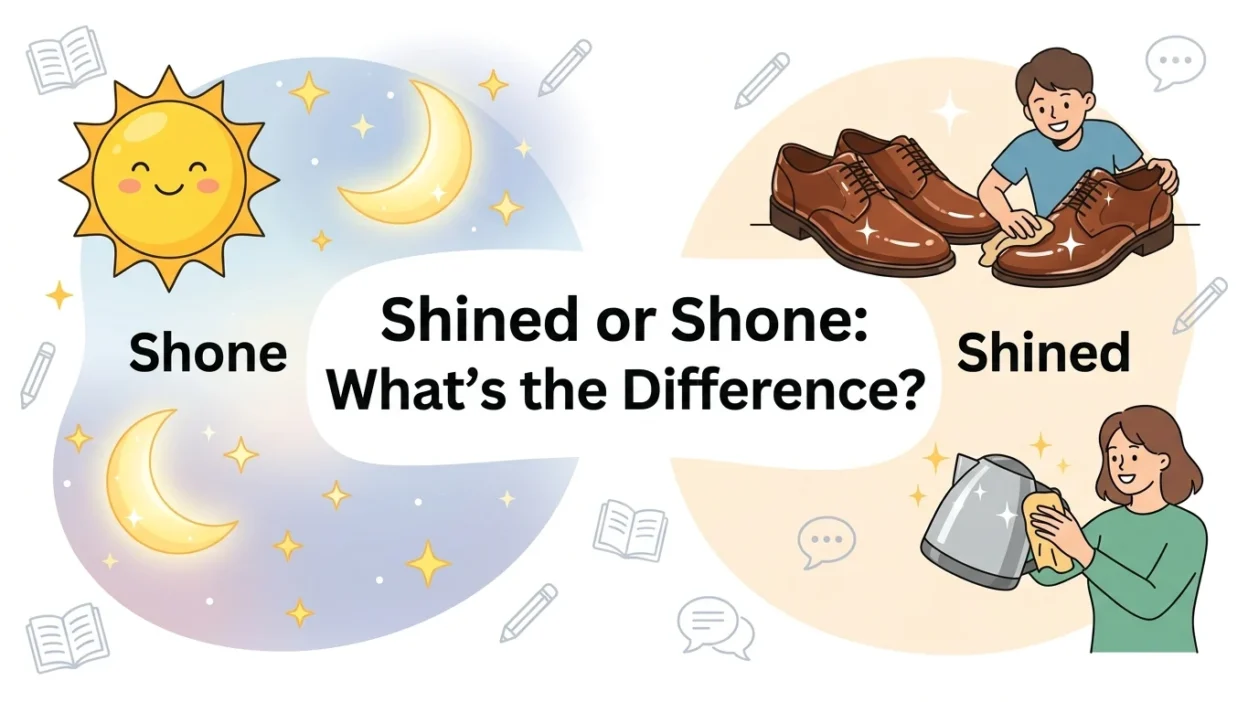
- Shone is usually used when something gives off light.
- Shined is usually used when someone makes something bright or clean.
- Both words are past forms of shine.
- In modern English, shone is often connected to natural light.
- Shined is often used when a person performs an action.
Examples:
- The sun shone all day. ✅
- He shined his shoes before the meeting. ✅
- The stars shone brightly at night. ✅
- She shined the silver plates. ✅
Simple Origin and Background
The verb shine has been part of English for hundreds of years.
Long ago, shone became the traditional past tense form. Over time, English speakers also started using shined, especially when talking about making something bright, polished, or clean.
Today, both forms are accepted in standard English. However, they are often used in slightly different situations.
That is why you may see both words in books, newspapers, conversations, and school writing.
The Difference Between Shined and Shone
The easiest way to remember the difference is to ask a simple question:
Is something naturally giving off light, or is a person making something shine?
Use “Shone” for Light
When light comes from the sun, stars, moon, lamps, or anything glowing, shone is usually preferred.
Examples:
- The moon shone through the clouds.
- The stars shone in the night sky.
- A bright light shone from the window.
- The sun shone all afternoon.
In these examples, nobody is actively polishing or cleaning anything. The object is simply giving off light.
Use “Shined” for an Action
When a person makes something bright, polished, or clean, shined is usually the better choice.
Examples:
- He shined his shoes.
- She shined the kitchen floor.
- The worker shined the metal surface.
- They shined the car before selling it.
In these examples, someone is performing an action.
Comparison Table
| Feature | Shone | Shined |
| Past form of shine | Yes | Yes |
| Usually related to light | Yes | Sometimes |
| Usually related to polishing | No | Yes |
| Common with sun, moon, stars | Yes | Rare |
| Common with shoes, floors, cars | Rare | Yes |
| Used in modern English | Yes | Yes |
| Accepted by grammar guides | Yes | Yes |
Quick Memory Trick
Think:
- Light → Shone
- Polish → Shined
This simple rule works in most situations.
Which One Should You Use and When?
When to Use “Shone”
Choose shone when describing light or brightness coming from something.
Examples:
- The lighthouse shone across the sea.
- The stars shone above us.
- The moon shone through the trees.
- Her eyes shone with happiness.
Notice that these examples focus on light or brightness.
When to Use “Shined”
Choose shined when someone actively makes something bright.
Examples:
- He shined his boots.
- She shined the silver spoon.
- They shined the windows before guests arrived.
- The employee shined the display case.
The action is being done by a person.
What About Modern Usage?
In everyday English, some people use shined in situations where others would use shone.
For example:
- The sun shined all day.
- The sun shone all day.
Both may be understood, but many teachers, editors, and grammar guides prefer shone for natural light.
Common Mistakes People Make
Mistake 1: Using Shined for Natural Light
Incorrect:
- The stars shined brightly.
Preferred:
- The stars shone brightly.
Mistake 2: Using Shone for Polishing
Less common:
- He shone his shoes.
More common:
- He shined his shoes.
Mistake 3: Thinking One Word Is Always Wrong
Some learners believe one form must be correct and the other must be incorrect.
That is not true.
Both shined and shone are real English words. The key is choosing the one that fits the situation.
Mistake 4: Memorizing Complicated Rules
Many students try to remember long grammar explanations.
Instead, remember this simple idea:
- If it is about light → shone
- If it is about polishing → shined
Everyday Real Life Examples
Emails
- I shined my shoes before the interview.
- The company logo shone brightly on the screen.
News Writing
- The sun shone across the city after days of rain.
- Workers shined the monument before the ceremony.
Social Media Posts
- The stars shone beautifully tonight.
- Just shined my car and it looks brand new.
Daily Conversations
- The moon shone through my bedroom window.
- Dad shined his boots before work.
- The light shone across the road.
- She shined the dining table before dinner.
School Writing
- The sun shone over the mountains.
- The student shined his presentation materials before the event.
Short Learning Section for Students and Beginners
Here is a simple lesson you can remember.
Step 1: Find the Subject
Ask yourself:
What is doing the action?
Examples:
- The sun
- The stars
- A person
- A worker
Step 2: Decide the Meaning
Ask:
Is it giving off light?
Or
Is someone making something bright?
Step 3: Choose the Correct Word
Giving off light:
- The moon shone.
Making something bright:
- She shined the silver.
Practice Exercise
Choose the correct word.
- The stars _____ brightly.
- He _____ his shoes.
- The lighthouse _____ across the water.
- She _____ the kitchen floor.
Answers:
- shone
- shined
- shone
- shined
FAQ
Is “shined” a real word?
Yes. Shined is a correct English word and is widely used.
Is “shone” a real word?
Yes. Shone is also correct and has been used for a very long time.
Which is more common for the sun?
Shone is usually preferred.
Example:
- The sun shone brightly.
Which is more common for shoes?
Shined is usually preferred.
Example:
- He shined his shoes.
Can I say “the sun shined”?
Some people do say it, and many listeners will understand it. However, many grammar guides prefer the sun shone.
Can I say “he shone his shoes”?
It may appear in some writing, but he shined his shoes is more common in modern English.
Do American and British English use these words differently?
There can be small differences in preference, but both forms are understood in American and British English.
What is the easiest rule to remember?
Remember:
- Shone = light
- Shined = polishing or making something bright
Conclusion
The difference between shined and shone is easier than many learners think.
Both words come from the verb shine, and both are correct. The main difference is how they are usually used.
- Use shone when talking about light coming from the sun, moon, stars, lamps, or other glowing things.
- Use shined when a person makes something bright, clean, or polished.
If you remember the simple rule “light = shone” and “polish = shined,” you will choose the right word in most everyday situations. This makes your English sound more natural, clear, and confident.