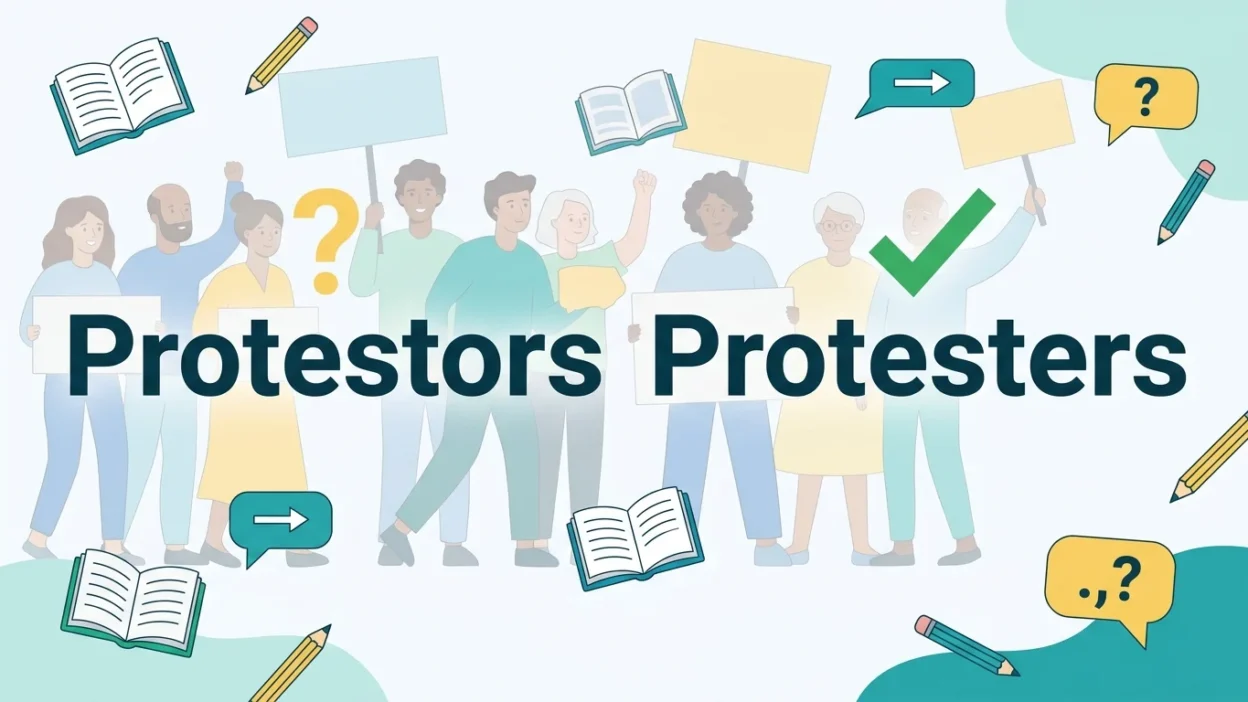
If you compare protestor and protester, the first thing to know is that both spellings are correct, accepted, and found in English dictionaries such as Merriam-Webster, Oxford, and Cambridge Dictionary. However, protester is the preferred, standard, modern English, and widely accepted form in journalism, academic writing, professional writing, digital publishing, media, news reports, news articles, and official communication.
In my experience reviewing articles, blogs, and professional reports, I have noticed that most editors, journalists, writers, bloggers, and publishers follow AP Stylebook, Associated Press, The New York Times, The Washington Post, Reuters, BBC, and other major publications, where protester clearly dominates in usage frequency, readability, consistency, credibility, audience familiarity, and search visibility.
While protestor remains an alternative spelling, variant spelling, and less common form, it still appears in historical documents, archived reports, quoted material, and some regional preferences across British English, American English, Canadian, and Australian usage.
The origin, history, and etymology of these words trace back to the Latin protestari, meaning declare publicly, later influenced by the French protêt during Middle English and Anglo French development. Grammatically, protester follows a common agent noun pattern like teacher, worker, driver, speaker, builder, and traveler, making it feel more natural, familiar, and intuitive to many native English speakers. A protester or protestor is a person who takes part in a protest, demonstration, march, rally, public demonstration, or activism movement to express opposition, objection, disagreement, dissent, or disapproval regarding a policy, law, political decision, social injustice, human rights, environmental concerns, labor disputes, or other public issues.
Whether discussing student protesters, climate protesters, civil rights marches, anti war demonstrations, Black Lives Matter, or people who marched peacefully while carrying banners and chanting slogans, the meaning remains the same. For most readers seeking a quick answer, protester is the recommended, standard spelling, and safer choice, while protestor remains a technically correct but less frequently encountered alternative.
Quick Answer of Protestors or Protesters
Here is the simple answer:
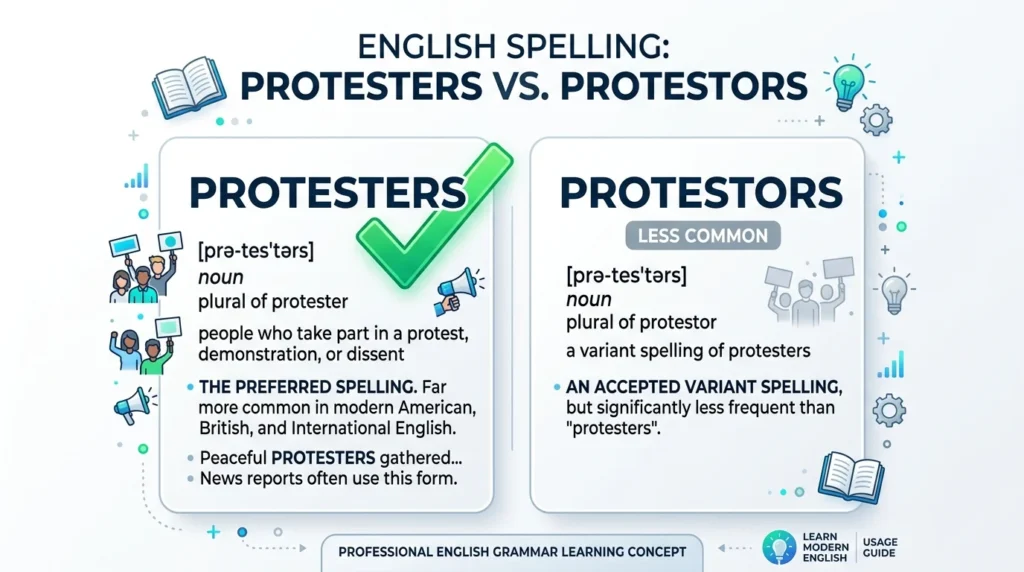
- Protesters is the most common and widely accepted spelling.
- Protestors is also a real word, but it is less common.
- In most everyday writing, school work, news articles, and conversations, people use protesters.
Example:
- Correct and common: The protesters marched peacefully.
- Less common: The protestors marched peacefully.
If you are unsure which one to choose, use protesters.
Simple Background and Origin of Protestors or Protesters
Both words come from the verb “protest.”
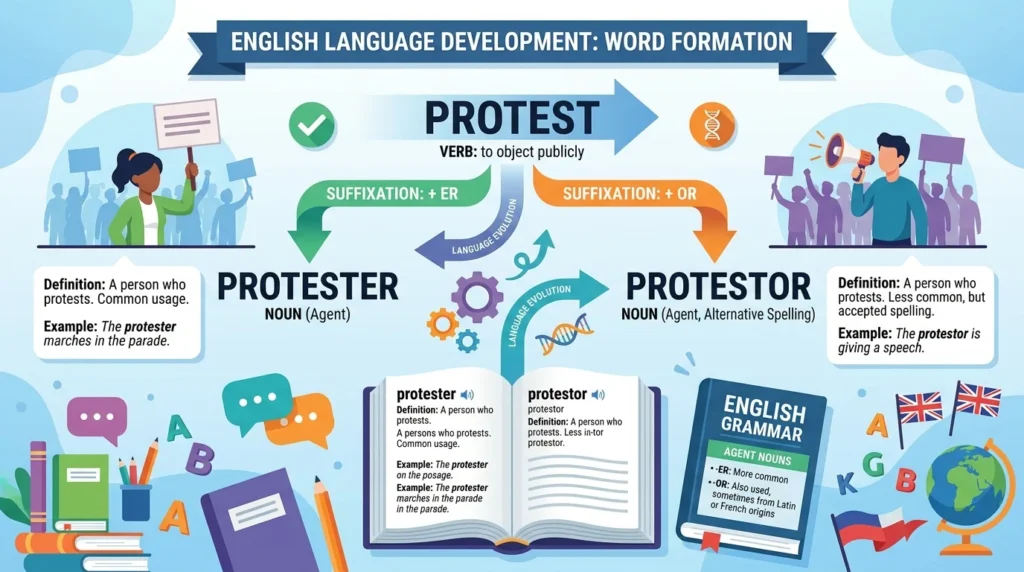
The verb protest means:
- to speak against something
- to show disagreement
- to publicly complain about an issue
For example:
- People may protest against unfair laws.
- Students may protest about school rules.
- Workers may protest for better pay.
When we add endings to verbs in English, we often create words for people who do the action.
Examples:
- Teach → teacher
- Farm → farmer
- Work → worker
With the word protest, English developed two forms:
- protester
- protestor
Over time, protester became much more common in modern English.
What Is the Difference Between Protestors and Protesters?
The main difference is not meaning. The main difference is usage and popularity.
Protesters
This is the standard and preferred spelling in modern English.
It is used:
- in schools
- in newspapers
- in books
- in daily conversation
- in formal and informal writing
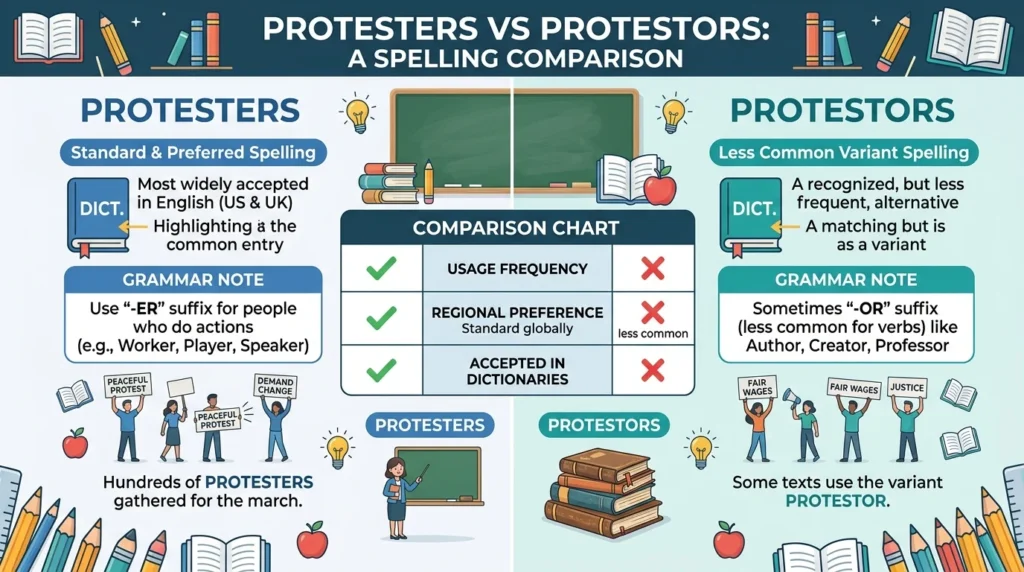
Protestors
This spelling exists, but it is less common.
Some people still use it, especially:
- in older writing
- in legal or formal situations
- in personal preference writing styles
However, most English teachers and dictionaries prefer protesters.
Comparison
| Feature | Protesters | Protestors |
| Common in modern English | Yes | No |
| Used in news articles | Very often | Rarely |
| Preferred by teachers | Yes | Usually no |
| Correct English word | Yes | Yes |
| Best choice for students | Yes | No |
| Easy for ESL learners | Yes | Less recommended |
| Formal and informal writing | Yes | Sometimes |
| Most natural choice | Yes | No |
Why “Protesters” Is More Common
English often uses the ending -er for a person who performs an action.
Examples:
- run → runner
- write → writer
- speak → speaker
- protest → protester
Because of this pattern, protester sounds more natural to many English speakers.
The ending -or also exists in English, but it is used less often.
Examples:
- actor
- creator
- director
Since English already strongly uses -er for action words, people naturally prefer protester.
Which One Should You Use Protestors or Protesters?
Best Choice: Protesters
If you are:
- a student
- an ESL learner
- writing an essay
- posting online
- sending emails
- writing reports
then protesters is the safest and best option.
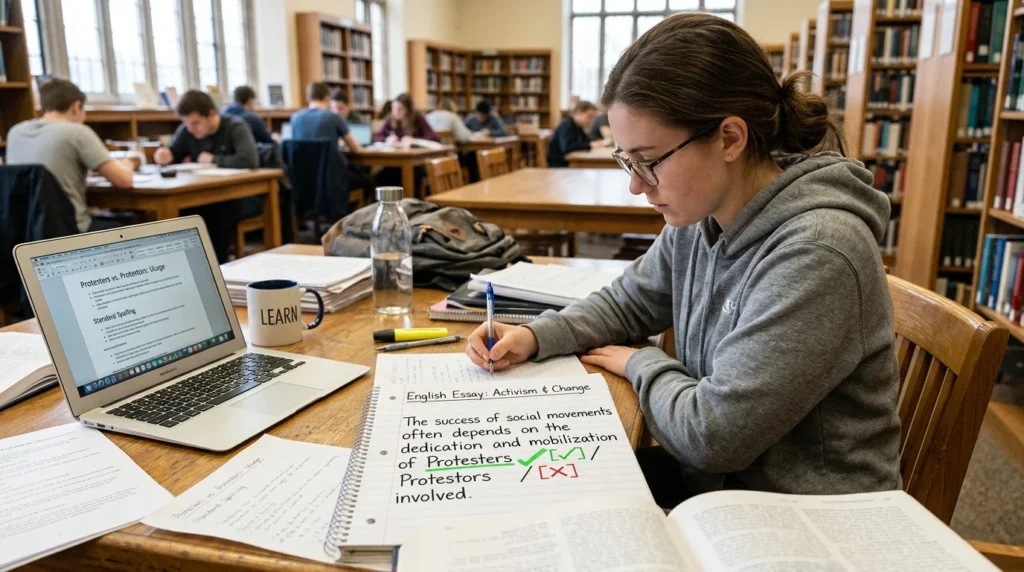
Use “Protestors” Only If:
- you personally prefer it
- you are copying a style guide that uses it
- you are reading older texts
Even then, many readers may still expect protesters.
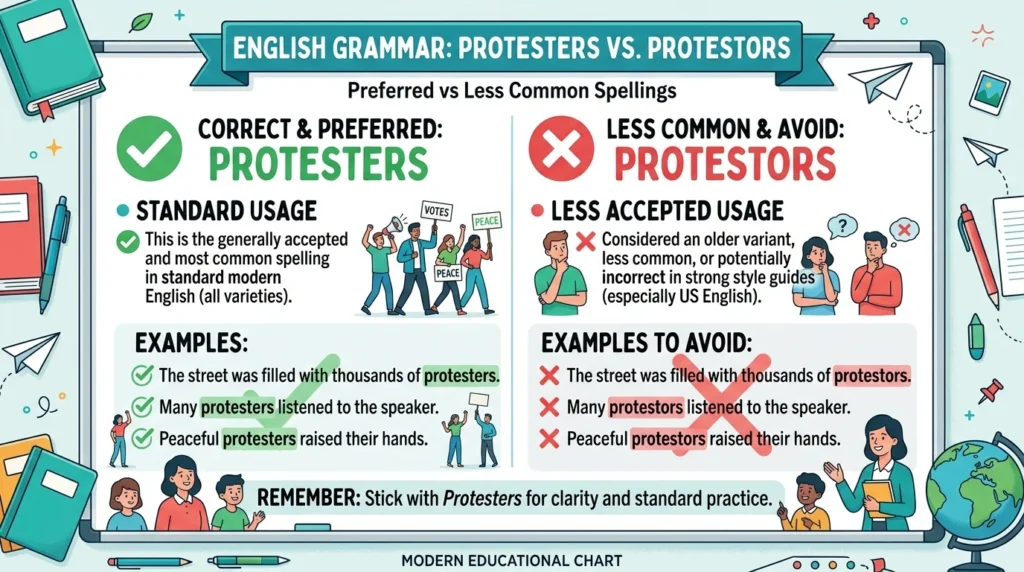
Examples Using “Protesters”
Here are easy examples with the recommended spelling.
News Example
- The protesters gathered outside the building.
School Example
- Students learned about civil rights protesters in history class.
Social Media Example
- Thousands of protesters filled the streets today.
Everyday Conversation
- The protesters were asking for change.
Email Example
- Local protesters organized a peaceful event downtown.
Examples Using “Protestors”
These sentences are still correct, but less common.
- The protestors carried signs.
- Several protestors spoke to reporters.
- The protestors demanded better conditions.
Most readers today would probably choose protesters instead.
Common Mistakes People Make for Protestors or Protesters
1. Thinking One Word Is Completely Wrong
Many people believe:
- protesters = correct
- protestors = wrong
This is not fully true.
Both words exist in English. However, protesters is simply much more common and preferred.
2. Mixing Both Spellings in One Piece of Writing
Do not switch between the two forms in the same article or essay.
Wrong:
- The protesters arrived early.
- Later, the protestors marched downtown.
Better:
- The protesters arrived early.
- Later, the protesters marched downtown.
Stay consistent.
3. Assuming “-or” Sounds More Formal
Some learners think words ending in -or sound smarter or more formal.
That is not always true.
In this case, protesters is actually the more natural and standard choice.
4. Copying Unusual Spellings From Social Media
Online posts sometimes use uncommon spellings. This can confuse learners.
Always remember:
- Common and standard English matters most in school and professional writing.
Real Life Examples in Daily Use of Protestors or Protesters
Here are examples from normal situations.
In a News Story
- Protesters gathered in the city center after the announcement.
In a Classroom
- The teacher explained how protesters influenced history.
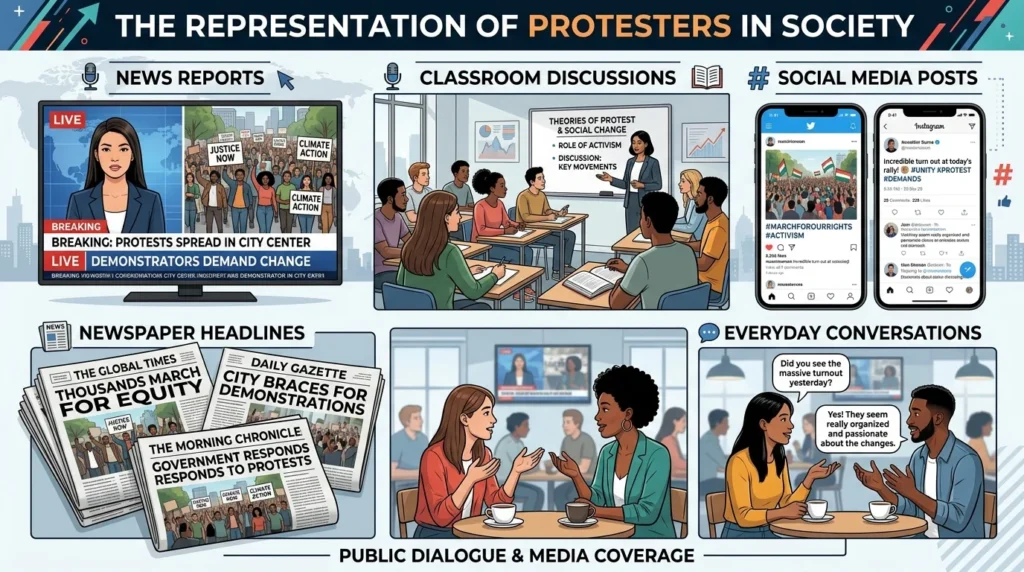
In a Text Message
- Did you see the protesters on TV today?
On Social Media
- The protesters are demanding safer roads.
In a Discussion
- Many protesters said they wanted peaceful change.
In a Newspaper Headline
- Protesters March Through Downtown Streets
You will notice that almost all modern examples use protesters.
Learning Section for Students and Beginners of Protestors or Protesters
Here is an easy way to remember the correct choice.
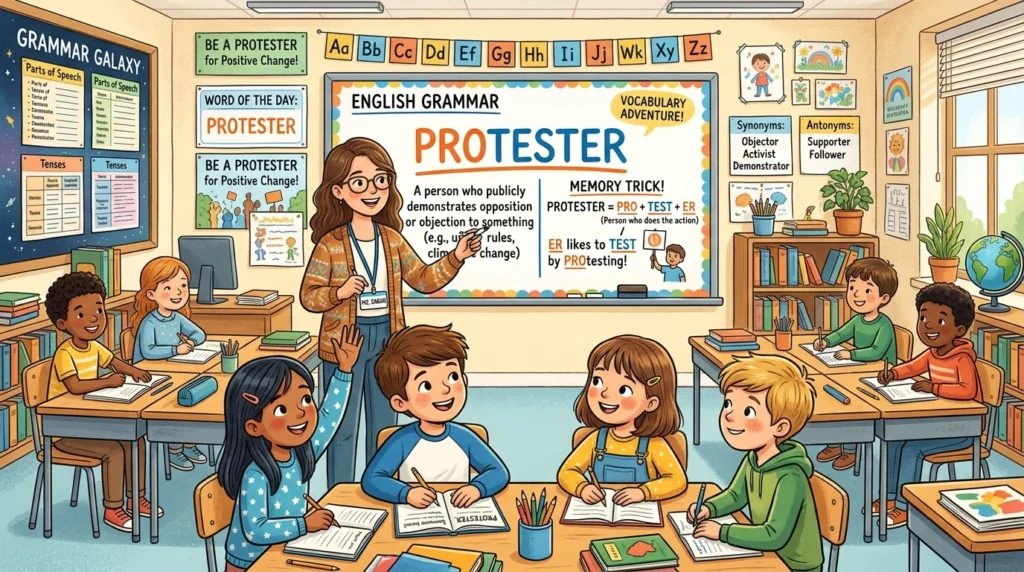
Simple Memory Trick
Think about common English words:
- teacher
- worker
- player
- singer
These all end in -er because they describe people doing actions.
Now think:
- protest → protester
This makes protester easier to remember.
Easy Rule
When talking about people who protest:
✅ Use protesters
This works in almost every situation.
Mini Practice
Choose the better word.
- The ______ marched peacefully.
- protesters ✅
- protestors
- News reporters interviewed several ______.
- protesters ✅
- protestors
- The ______ carried signs and banners.
- protesters ✅
- protestors
Protesters vs Protestors in American and British English
Both American English and British English usually prefer protesters.
You may occasionally see protestors, but it is still less common in both styles of English.
So whether you write:
- American English
- British English
- international English
the safest option is still protesters.
Are Both Words in the Dictionary?
Yes.
Many dictionaries list both:
- protester
- protestor
But dictionaries also show that:
- protester is more widely used
- protestor is less common
That is why teachers and editors usually recommend protester.
FAQ
Is “protestors” wrong?
No. It is a real English word. However, it is less common than “protesters.”
Which spelling should students use?
Students should usually use protesters because it is the standard modern spelling.
Do newspapers use “protesters” or “protestors”?
Most newspapers use protesters.
Is “protester” American English only?
No. Both American and British English commonly use “protester.”
Why do some people write “protestors”?
Some people prefer older or personal spelling styles. Others simply learned it that way.
Which spelling sounds more natural?
For most English speakers, protesters sounds more natural.
Can I use both spellings in the same essay?
No. Choose one spelling and stay consistent. “Protesters” is the better choice.
Which word should ESL learners remember?
ESL learners should remember:
✅ protesters
It is easier, more common, and more widely accepted.
Conclusion
The difference between protestors and protesters is actually very simple.
Both words are correct, and both refer to people who protest. However:
- Protesters is the modern, common, and preferred spelling.
- Protestors is much less common today.
For students, beginners, and everyday writing, the best choice is almost always protesters.
If you remember only one thing from this article, remember this:
✅ Use “protesters” in most situations.