
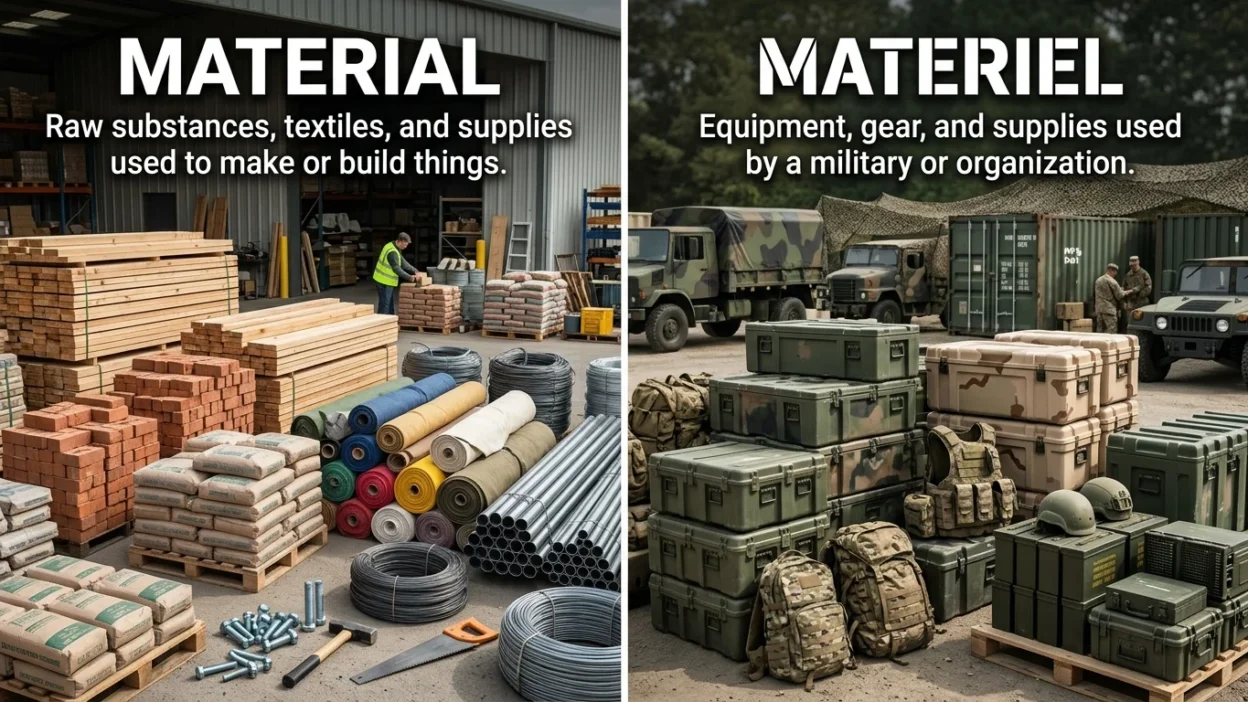
Have you ever confused material and materiel while writing or reading English? These two words look almost identical and have the same pronunciation in many English accents, but their meanings are very different. Understanding the difference between material and materiel can help you avoid spelling mistakes and choose the correct word in everyday writing, education, business, and military discussions.
The word material has several common meanings. It can refer to a substance used to make something, information used for learning, or something important or relevant. In contrast, materiel is a specialized military term that refers to the equipment, supplies, weapons, vehicles, and other physical resources used by armed forces. Although the words share similar spelling and pronunciation, they cannot be used interchangeably. This guide explains their meanings, differences, correct usage, and practical examples in simple English.
Quick Answer: Material vs. Materiel
Material refers to substances, fabrics, information, or resources used to create or support something. Materiel refers specifically to military equipment, supplies, weapons, and other physical resources. Both words are pronounced similarly, but their meanings and contexts are different. Use material for general purposes and materiel for military supplies.
Why Do People Confuse Material and Materiel?
People often confuse material and materiel because their spellings differ by only one letter arrangement. Both words also have similar pronunciations, making them difficult to distinguish when heard in conversation.
There are three main reasons for this confusion:
- Similar spelling: Both words contain almost the same letters.
- Similar pronunciation: In most English accents, they sound alike or nearly alike.
- Different levels of familiarity: Material is a common everyday word, while materiel is mainly used in military and defense-related discussions.
For example:
- The factory needs more building material.
- The army needs additional military materiel.
Both sentences are grammatically correct, but they describe different things.
First Word: What Does Material Mean?
Material is a noun and an adjective with several meanings. It generally refers to a physical substance, information, resources, or something important to a particular situation.
It is widely used in everyday English, education, science, construction, business, and manufacturing.
1. Material as a Noun
As a noun, material can describe a substance used to make something.
Examples include:
- Wood is a natural building material.
- Cotton is a popular clothing material.
- Plastic is used to manufacture many products.
- Steel is a strong construction material.
It can also refer to information or content used for learning, research, or communication.
Examples:
- The teacher prepared study material for students.
- I collected research material for my project.
- The company published educational material online.
2. Material as an Adjective
As an adjective, material can mean physical, significant, or relevant, depending on the context.
Examples:
- The company suffered material damage.
- There was no material difference between the two products.
- The lawyer presented material evidence in court.
In legal and business contexts, material often describes something important enough to influence a decision.
Origin and History of Material
The word material comes through Middle English and Old French from Latin materia, meaning substance, matter, or building material.
Over time, its meaning expanded to include physical substances, resources, information, and important facts.
Second Word: What Does Materiel Mean?
Materiel is a noun that refers to the equipment, supplies, weapons, vehicles, and other physical resources needed by a military organization.
It is primarily used in military, defense, logistics, and government contexts.
Examples of military materiel include:
- Weapons and ammunition
- Military vehicles and tanks
- Aircraft and helicopters
- Radios and communication equipment
- Protective clothing and body armor
- Medical supplies
- Fuel and maintenance equipment
How Is Materiel Used in Military English?
Military organizations need more than soldiers to operate effectively. They also require equipment, transportation, communication systems, and essential supplies.
The word materiel describes these physical resources collectively.
Examples:
- The military received new materiel for its operations.
- The warehouse stores essential defense materiel.
- Officials inspected the military materiel before deployment.
- The supply team delivered additional materiel to the base.
Origin and History of Materiel
The word materiel comes from French matériel, meaning equipment or material resources.
English adopted the word primarily for military use to distinguish equipment and supplies from personnel.
In military terminology, personnel refers to the people serving in an organization, while materiel refers to its physical equipment and resources.
Material vs. Materiel: Comparison Table
The easiest way to understand these words is to compare their meanings, uses, and examples.
| Feature | Material | Materiel |
| Part of speech | Noun and adjective | Noun |
| Main meaning | Substance, information, or resources | Military equipment and supplies |
| Common usage | Everyday English | Military and defense |
| Pronunciation | muh-TEER-ee-uhl | muh-TEER-ee-uhl |
| Context | Education, science, business, construction | Military logistics and defense |
| Example | We need more building material. | The army received new materiel. |
| Frequency | Very common | Specialized and less common |
The main difference: Material has broad meanings, while materiel specifically refers to military equipment and supplies.
When Should You Use Material or Materiel?
Choosing the correct word becomes easier when you consider the subject of your sentence.
Use Material When Talking About Substances
Choose material when describing something used to make, build, or manufacture an object.
Examples:
- The furniture is made from recycled material.
- Cotton is a comfortable material for summer clothes.
- The builder ordered additional construction material.
Use Material When Talking About Information
Use material when referring to educational content, documents, research, or other information.
Examples:
- Students received learning material.
- The researcher collected historical material.
- The website provides useful reading material.
Use Material When Describing Importance
Use material as an adjective when something is significant or relevant.
Examples:
- The decision caused material changes.
- The report contains material information.
- The court considered the material evidence.
Use Materiel When Talking About Military Equipment
Choose materiel when discussing military resources, equipment, or supplies.
Examples:
- The army transported military materiel.
- The defense department purchased additional materiel.
- The base received essential materiel for its operations.
Simple rule: If you are discussing general substances or information, use material. If you are discussing military equipment and supplies, use materiel.
12 Examples of Material and Materiel in Sentences
The following examples show how to use both words correctly in everyday and professional English.
Examples of Material
- Wood is a popular material for making furniture.
- The teacher shared study material with the students.
- Cotton is a soft material used in clothing.
- The company needs more raw material for production.
- Plastic is a lightweight material used in packaging.
- The researcher collected material for the final report.
- The building suffered material damage during the storm.
- The lawyer presented material evidence during the trial.
Examples of Materiel
- The military received new materiel for its operations.
- The warehouse stores important military materiel.
- The government approved additional funding for defense materiel.
- Soldiers inspected the materiel before it was transported.
These examples demonstrate that material works in general situations, while materiel belongs mainly to military and defense-related contexts.
Common Mistakes When Using Material and Materiel
Even experienced English writers sometimes confuse these words. Understanding common mistakes can help you use them correctly.
Mistake 1: Using Materiel for Ordinary Building Supplies
Incorrect: The construction company ordered new materiel.
Correct: The construction company ordered new material.
Why? Construction supplies are generally called materials, not materiel.
Mistake 2: Using Material for Military Equipment
Incorrect: The army received new military material for its operations.
Better: The army received new military materiel for its operations.
Why? Materiel is the established term for military equipment and supplies.
Mistake 3: Thinking Both Words Have the Same Meaning
Although the words look and sound similar, their meanings are not interchangeable.
Remember that material has several general meanings, while materiel has a specialized military meaning.
Mistake 4: Forgetting the Spelling Difference
Material contains the letters -ial, while materiel contains -iel at the end.
This small spelling difference changes the meaning of the word.
Easy Memory Trick: How to Remember Material vs. Materiel
Here is a simple trick to remember the difference:
- Material = Making things: Think about wood, cotton, steel, paper, and other substances used to make products.
- Materiel = Military equipment: Think about tanks, weapons, vehicles, ammunition, and defense supplies.
You can also remember this sentence:
Material makes things; materiel equips the military.
This short memory trick can help you choose the correct spelling whenever you write these words.
American vs. British English: Material and Materiel
There is no major difference between American and British English in the basic meanings of material and materiel.
Both varieties use:
- Material for substances, educational resources, information, and significant matters.
- Materiel for military equipment, supplies, and physical resources.
The spelling of these words remains the same in both varieties of English.
Their pronunciation is also generally similar, although individual accents may produce small differences.
For example:
- American English: The military ordered additional materiel.
- British English: The military ordered additional materiel.
Both sentences are correct.
Similar Words: Material, Materiel, Matter, and Supplies
Several English words are related to material and materiel, but each has a different meaning.
Material
A substance, resource, or information used for a particular purpose.
Example: The factory uses recycled material.
Materiel
Military equipment and supplies used by armed forces.
Example: The army received additional materiel.
Matter
A physical substance or a subject being discussed.
Example: Water is a form of matter.
Supplies
Items needed for a particular activity, job, or organization.
Example: The school ordered new office supplies.
Equipment
Tools, machines, or devices needed to perform a particular task.
Example: The hospital purchased new medical equipment.
These words are related in certain contexts, but they are not exact synonyms.
Final Verdict: Material vs. Materiel
The difference between material and materiel is simple once you understand their meanings.
Material is the general word used for physical substances, educational resources, information, and important matters. It appears frequently in everyday English.
Materiel is a specialized military term for equipment, weapons, vehicles, supplies, and other physical resources used by armed forces.
Although both words look and sound similar, they serve different purposes. Choosing the correct spelling depends on the context of your sentence.
Frequently Asked Questions (FAQs)
1. What is the main difference between material and materiel?
Material refers to substances, information, or resources used for different purposes. Materiel refers specifically to military equipment, weapons, vehicles, and supplies. The main difference is their context and meaning.
2. Are material and materiel pronounced the same?
Yes. In most English accents, material and materiel are pronounced identically or very similarly. Their pronunciation does not usually help distinguish them, so understanding the context is important.
3. Is materiel only used in military contexts?
Materiel is primarily a military term. It describes the physical equipment and supplies used by armed forces. It is also used in defense logistics and related government discussions.
4. Can material and materiel be used interchangeably?
No. These words have different meanings and cannot normally replace each other. Material is used for general substances and resources, while materiel refers to military equipment and supplies.
5. What is an example of materiel in a sentence?
Example: The military transported essential materiel to the training facility. In this sentence, materiel refers to the equipment and supplies needed by military personnel.
6. What is the plural form of materiel?
Materiel is generally treated as a mass noun and does not normally take a plural form. Writers usually say military materiel or additional materiel rather than materiels.
7. Is material a noun or an adjective?
Material can function as both a noun and an adjective. As a noun, it refers to a substance or information. As an adjective, it can mean physical, significant, or relevant.
8. What is an easy way to remember material and materiel?
Remember that material is used for making things, such as clothes, furniture, and buildings. Materiel is used for military equipment, such as weapons, vehicles, and supplies.
Remember This
- Material: Substances, information, resources, or something important.
- Materiel: Military equipment, weapons, vehicles, and supplies.
- Material is a common English word.
- Materiel is a specialized military term.
- Both words sound similar, but their meanings are different.
The easiest rule is: Material is for general use, while materiel is for military use.
Conclusion
Understanding the difference between material and materiel is important for accurate English writing. Although these words have similar spelling and pronunciation, they describe different things. Material refers to substances, information, and resources, while materiel refers to military equipment and supplies. Knowing their meanings makes it easier to avoid common spelling and vocabulary mistakes.
Whenever you are unsure which word to use, look at the context of your sentence. If you are discussing wood, fabric, research, or building supplies, choose material. If you are discussing weapons, military vehicles, or defense equipment, choose materiel. With this simple distinction, you can use both words confidently in your writing.