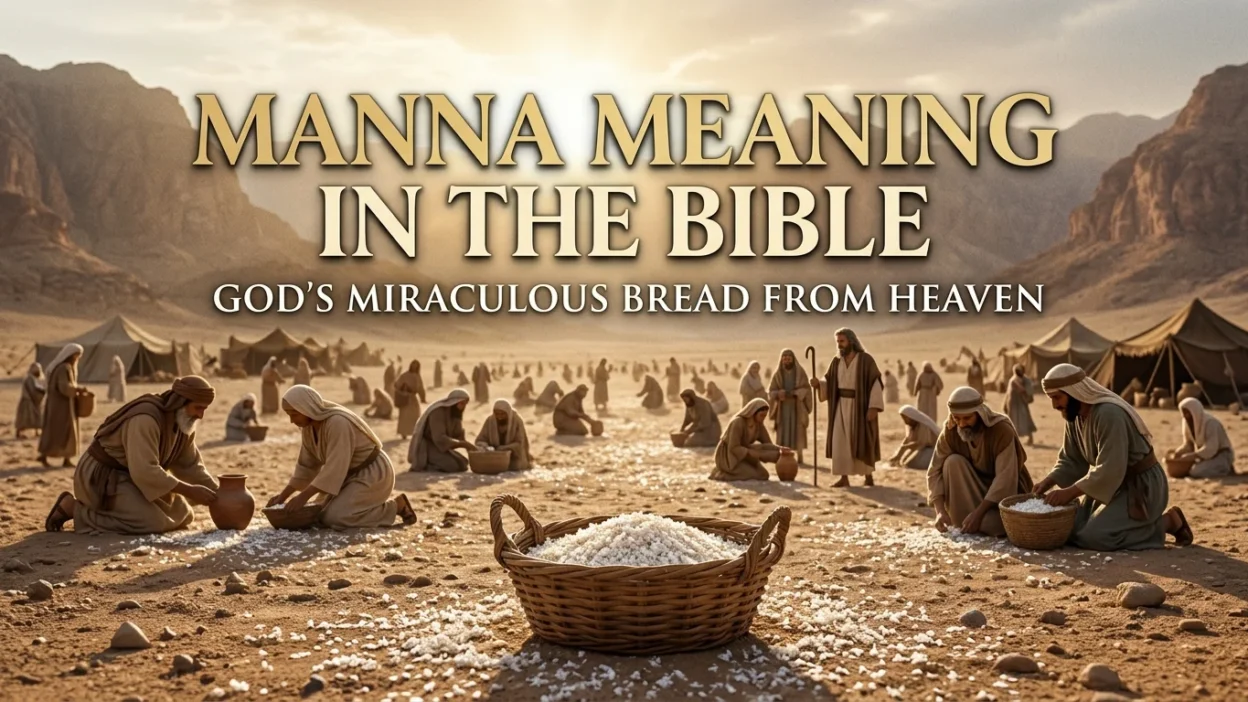
The manna meaning in the Bible is closely connected to God’s provision, faithfulness, and care for His people. Manna was a special food that God provided for the Israelites while they traveled through the wilderness after leaving Egypt.
When the people had no regular food to eat, God sent manna from heaven to meet their daily needs. This miraculous food became an important sign of His love and protection.
In the Bible, manna also represents spiritual nourishment, trust, obedience, and dependence on God. It teaches believers that God knows their needs and can provide for them even in difficult situations.
The story of manna appears mainly in Exodus 16 and is also discussed in other books of the Bible. Understanding its meaning helps readers discover important lessons about faith, gratitude, and God’s promises.
Quick Answer: What Does Manna Mean in the Bible?
Manna in the Bible means the miraculous food God provided from heaven for the Israelites during their journey through the wilderness. It symbolizes God’s daily provision, faithfulness, care, and protection. Spiritually, manna reminds believers to trust God, depend on Him, and receive the spiritual nourishment He provides.
Why Do People Confuse the Meaning of Manna?
People sometimes confuse the meaning of manna because it has both a physical and a spiritual meaning in the Bible.
In its physical sense, manna was the food God provided to the Israelites in the wilderness. It appeared on the ground each morning and was gathered by the people for their daily meals.
In its spiritual sense, manna represents God’s ability to provide what His people need. Jesus also connected the idea of heavenly bread with spiritual life when He described Himself as the Bread of Life in John 6:35.
Here are some common reasons for confusion:
- Physical food: Manna was real food given to the Israelites.
- Heavenly provision: It demonstrated God’s miraculous power and care.
- Spiritual nourishment: It points to the importance of receiving spiritual strength from God.
- Daily dependence: The Israelites had to gather it regularly instead of storing it for ordinary future use.
Understanding these differences makes the biblical message of manna easier to understand.
First Word: What Does “Man” Mean?
The Hebrew expression associated with the name manna is commonly connected with the question “What is it?”
In Exodus 16:15, when the Israelites first saw the unusual substance on the ground, they asked one another what it was. Moses explained that it was the bread the Lord had provided for them.
The word is associated with the Hebrew expression often written as “man hu,” meaning “What is it?” This reflects the Israelites’ surprise when they first encountered the mysterious food.
The important lesson is that God sometimes provides in ways people do not immediately understand. The Israelites did not recognize the food at first, but Moses helped them understand that it was God’s provision.
Second Word: What Does “Hu” Mean?
The Hebrew word “hu” is generally translated as “he” or “it,” depending on the context.
In the expression commonly associated with manna, “man hu” communicates the question “What is it?” The expression reflects the Israelites’ reaction to the unfamiliar food.
This connection helps explain why the name manna is associated with the question asked in Exodus 16:15.
It is important to understand that the Bible focuses more on the miraculous provision of manna than on a detailed linguistic explanation of its name.
Manna vs. Other Biblical Bread: What Is the Difference?
The Bible mentions different kinds of bread and food. Although they can all represent nourishment, they do not have exactly the same meaning.
| Biblical Food | Meaning | Main Bible Reference |
| Manna | Miraculous food provided by God | Exodus 16:14–15 |
| Bread of Life | Jesus as the source of eternal life | John 6:35 |
| Unleavened Bread | Bread connected with the Israelites’ departure from Egypt | Exodus 12:17 |
| Daily Bread | Dependence on God for everyday needs | Matthew 6:11 |
| Bread and Fish | Jesus’ miraculous provision for a crowd | Matthew 14:19–21 |
Manna is especially important because it reminds readers that God can provide for His people when ordinary resources are unavailable.
When Should You Use Each Meaning of Manna?
The meaning of manna depends on the context in which it is discussed.
1. Physical meaning
Use this meaning when discussing the food God gave the Israelites in the wilderness.
Example: “God provided manna for the Israelites when they had no food.”
Use this meaning when explaining how God strengthens and nourishes believers spiritually.
Example: “The story of manna teaches Christians to depend on God for spiritual strength.”
Use this meaning when discussing God’s faithfulness, provision, and care.
Example: “Manna is a powerful symbol of God’s daily provision.
4. Connection to Jesus
Use this meaning when explaining Jesus’ description of Himself as the Bread of Life.
Example: “Jesus is the Bread of Life, offering spiritual life that ordinary food cannot provide.”
10 Important Biblical Examples and Lessons About Manna
The story of manna teaches several important lessons. Here are ten examples from Scripture that help explain its meaning.
1. God Provides Manna in the Wilderness
Bible Reference: Exodus 16:4
God promised to provide bread from heaven for the Israelites. This happened when they were struggling with hunger in the wilderness.
Lesson: God can provide for His people even when their circumstances seem impossible.
2. The Israelites Discover Manna
Bible Reference: Exodus 16:14–15
When the morning dew disappeared, a thin layer of food appeared on the ground. The Israelites were surprised and asked what it was.
Lesson: God’s provision may come in unexpected ways.
3. Manna Appeared Every Morning
Bible Reference: Exodus 16:21
The Israelites gathered manna every morning according to their needs. When the sun became hot, the remaining manna melted.
Lesson: God’s daily provision teaches believers to trust Him one day at a time.
4. God Provided Enough for Everyone
Bible Reference: Exodus 16:16–18
Each person gathered manna according to their needs. Those who gathered much did not have too much, and those who gathered little did not lack.
Lesson: God’s provision is connected with His care for the needs of His people.
5. Manna Was Not to Be Stored Overnight
Bible Reference: Exodus 16:19–20
Moses instructed the Israelites not to keep manna until the following morning. Some people disobeyed and discovered that it had spoiled and developed worms.
Lesson: God calls His people to trust His instructions rather than depend on fear and unnecessary hoarding.
6. God Provided Extra Manna Before the Sabbath
Bible Reference: Exodus 16:22–26
On the sixth day, the Israelites gathered twice as much manna. This allowed them to rest on the seventh day.
Lesson: God provides for our needs and teaches the importance of rest and obedience.
7. God Preserved a Portion of Manna as a Reminder
Bible Reference: Exodus 16:32–34
Moses instructed Aaron to keep a jar of manna as a reminder of God’s provision for future generations.
Lesson: Remembering God’s past blessings can strengthen our faith during difficult times.
8. Manna Continued During the Wilderness Journey
Bible Reference: Exodus 16:35
The Israelites ate manna for forty years until they reached an inhabited land.
Lesson: God’s faithfulness does not disappear when a difficult season lasts longer than expected.
9. Manna Stopped After Israel Entered Canaan
Bible Reference: Joshua 5:12
After the Israelites ate food from the land of Canaan, the manna stopped. They no longer needed the same miraculous daily provision because they had entered the promised land.
Lesson: God’s provision can change according to the needs and seasons of life.
10. Jesus Describes Himself as the Bread of Life
Bible Reference: John 6:31–35
Jesus referred to the manna given to the Israelites and explained that He is the true Bread of Life. He taught that whoever comes to Him will not hunger spiritually.
Lesson: Physical food satisfies temporary hunger, but Jesus offers spiritual life.
Common Mistakes About the Meaning of Manna
Readers sometimes misunderstand the biblical story of manna. Avoiding these mistakes helps you understand its message correctly.
- Mistake 1: Thinking manna was ordinary bread. Manna was a miraculous food provided by God, not ordinary bread made by human hands.
- Mistake 2: Believing manna appeared only once. God provided it regularly throughout the Israelites’ wilderness journey.
- Mistake 3: Thinking manna was given to the Egyptians. The biblical account describes manna as God’s provision for the Israelites.
- Mistake 4: Believing manna means money or wealth. Its main biblical meaning is God’s provision, not financial riches.
- Mistake 5: Thinking manna and the Bread of Life are identical. Manna was physical food, while Jesus used the image of heavenly bread to explain spiritual life.
- Mistake 6: Assuming manna continued forever. It stopped after the Israelites entered Canaan and began eating the produce of the land.
Memory Trick: How to Remember the Meaning of Manna
A simple way to remember manna is to connect it with three important words:
Manna = Provision + Faith + Daily Trust
- Provision: God supplied food when the Israelites were hungry.
- Faith: The Israelites needed to believe that God would continue providing.
- Daily Trust: They gathered manna each morning and learned to depend on God.
You can remember the central message with this simple sentence:
“God provided manna for physical hunger and teaches us to depend on Him for spiritual nourishment.”
American vs. British English: Is There a Difference?
The word “manna” has the same meaning in American and British English. There is no difference in its biblical definition or spelling.
Both American and British English use the word when discussing the food God provided to the Israelites.
| Language Variety | Spelling | Meaning |
| American English | Manna | Miraculous food from God |
| British English | Manna | Miraculous food from God |
The pronunciation is also broadly similar in both varieties.
In modern English, the expression “manna from heaven” is sometimes used to describe an unexpected blessing or something helpful that arrives when it is greatly needed.
Example: “The financial support was like manna from heaven.”
Similar Words and Related Biblical Terms
Several biblical words are connected with manna because they describe God’s provision, nourishment, and spiritual care.
- Provision: Something supplied to meet a need.
- Nourishment: Food or spiritual strength that helps someone grow.
- Bread: A basic food that can also represent spiritual life in Scripture.
- Sustenance: Something that keeps a person alive or strong.
- Blessing: A gift or favor received from God.
- Faithfulness: God’s reliability and commitment to His promises.
- Heavenly Bread: A biblical expression associated with God’s provision and spiritual nourishment.
- Daily Bread: The everyday needs believers ask God to provide in the Lord’s Prayer.
These words help explain the deeper message of manna without suggesting that they all have exactly the same meaning.
Final Verdict: What Is the True Biblical Meaning of Manna?
The true biblical meaning of manna is God’s miraculous provision for His people during their journey through the wilderness. It demonstrates His power, faithfulness, mercy, and care.
Manna also carries an important spiritual lesson. It teaches believers to trust God daily rather than depend entirely on their own strength. In John 6, Jesus develops the image of heavenly bread by identifying Himself as the Bread of Life, pointing to a deeper spiritual nourishment that lasts beyond physical food.
Frequently Asked Questions About Manna in the Bible
1. What does manna mean spiritually in the Bible?
Spiritually, manna represents God’s provision, faithfulness, and nourishment. It reminds believers that God knows their needs and can strengthen them during difficult times. It also encourages daily trust in Him.
2. What was manna made of in the Bible?
Exodus 16 describes manna as a small, flaky substance that appeared on the ground after the morning dew disappeared. Numbers 11:7–8 compares its appearance to coriander seed and describes its color as similar to bdellium. The Bible explains how it looked and tasted but does not give a complete scientific explanation of its composition.
3. Why did God send manna to the Israelites?
God sent manna because the Israelites were hungry during their journey through the wilderness. He provided food to sustain them and teach them to depend on His care and follow His instructions.
4. How long did the Israelites eat manna?
According to Exodus 16:35, the Israelites ate manna for forty years while traveling through the wilderness. It stopped after they entered Canaan and began eating food from the land, as recorded in Joshua 5:12.
5. What does manna symbolize in Christianity?
In Christianity, manna symbolizes God’s provision and spiritual nourishment. It is also connected with Jesus’ teaching about the Bread of Life in John 6, where Jesus explains that He offers lasting spiritual life.
6. What does manna from heaven mean?
“Manna from heaven” refers to the miraculous food God provided for the Israelites. In everyday English, the expression can also describe an unexpected blessing or help that arrives at the right time.
7. Is manna mentioned in the New Testament?
Yes. Manna is mentioned in the New Testament, including John 6:31–35, where Jesus discusses the manna given to the Israelites and identifies Himself as the Bread of Life. Revelation 2:17 also mentions hidden manna as a promise to the one who overcomes.
Remember This
Manna is more than a story about food. It is a reminder of God’s faithfulness and His ability to meet the needs of His people.
Remember these three important lessons:
- God provides even when resources seem limited.
- Faith requires trusting God each day.
- Spiritual nourishment is more important than temporary physical satisfaction.
The story of manna encourages believers to remain faithful, grateful, and dependent on God in every season of life.
Conclusion
The manna meaning in the Bible teaches an important lesson about God’s love, provision, and faithfulness. God provided manna to the Israelites when they were hungry in the wilderness, showing that He could meet their needs even in difficult circumstances. The story also teaches obedience, gratitude, and the importance of trusting God every day.
For Christians, manna has an additional spiritual connection through Jesus Christ, who described Himself as the Bread of Life in John 6:35. Just as manna sustained the Israelites physically, Jesus offers spiritual life and nourishment. Ultimately, the story of manna reminds us that God remains faithful and provides what His people need according to His purpose.