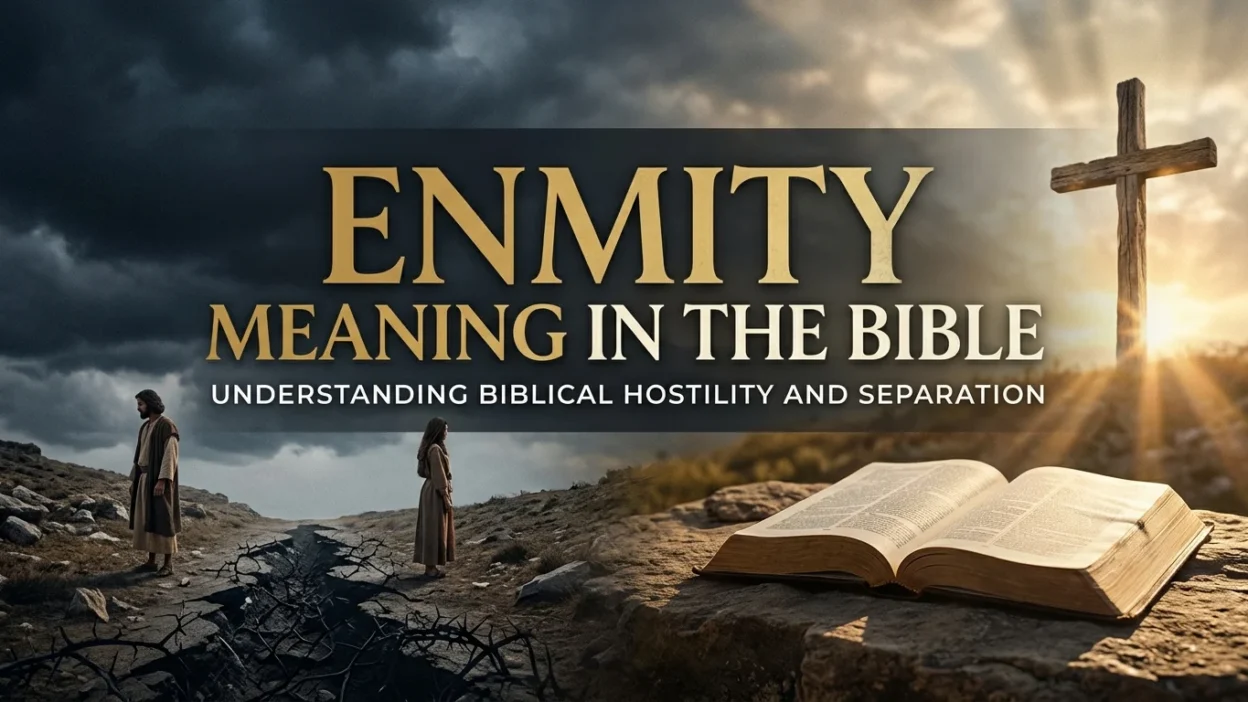
The Enmity meaning in the Bible refers to hatred, hostility, opposition, or deep disagreement between individuals, groups, or God and those who oppose His ways. It is a powerful biblical word that describes more than an ordinary argument or temporary dislike.
Enmity represents a serious separation caused by sin, pride, jealousy, or rebellion. The Bible uses this word to explain the conflict between good and evil and the spiritual struggle between following God and following sinful desires.
Understanding enmity helps readers recognize important biblical lessons about forgiveness, peace, love, and obedience. From the story of Adam and Eve to the teachings of Jesus Christ,
Scripture shows how hostility damages relationships and why believers should choose love instead of hatred. This guide explains the biblical definition of enmity, its origin, important Bible verses, practical examples, and spiritual meaning in simple English.
Quick Answer: What Does Enmity Mean in the Bible?
Enmity in the Bible means deep hatred, hostility, or opposition between two parties. It often describes the conflict between good and evil, humanity and sin, or people who reject God’s commands. Genesis 3:15 introduces the idea of enmity between the serpent and the woman, showing the spiritual conflict between evil and God’s purpose.
Why Do People Confuse Enmity?
People sometimes confuse enmity with ordinary anger, disagreement, or dislike because these feelings can all create conflict. However, enmity is much stronger and usually describes lasting hostility or deep opposition.
For example, two friends may disagree about a decision without becoming enemies. However, when their disagreement develops into deep hatred and a desire to oppose each other, it may become enmity.
In biblical language, enmity also has a spiritual meaning. It can describe the struggle between sinful human desires and God’s will.
Understanding this difference makes Bible passages about hostility, reconciliation, and forgiveness easier to understand.
First Word: Enmity
The word enmity is a noun that means deep-seated hatred, hostility, or opposition.
It comes from the Old French word enemisté and is related to the Latin word inimicus, meaning enemy.
In the Bible, enmity often describes a condition of hostility rather than a single angry moment.
Examples:
- Enmity between two enemies can destroy peace.
- Sin creates opposition to God’s holy nature.
- Christians are encouraged to overcome hatred with love.
- Enmity can separate people who once lived peacefully together.
Biblical example:
Genesis 3:15 introduces enmity between the serpent and the woman. This verse is commonly understood as describing the continuing conflict between evil and God’s purposes.
Second Word: Biblical Meaning of Enmity
The biblical meaning of enmity goes beyond ordinary human disagreements. It describes opposition that affects relationships, moral choices, and spiritual life.
The Bible uses this idea in several important ways:
1. Spiritual opposition: Enmity can describe the conflict between God’s ways and sinful desires.
2. Human hostility: It can refer to hatred or conflict between people.
3. Opposition to God: It can describe the attitude of people who resist God’s authority.
4. Conflict between good and evil: It can represent the struggle between righteousness and wickedness.
James 4:4 warns that friendship with the world can become enmity with God. The passage teaches believers to avoid allowing worldly desires to take the place of devotion to God.
Enmity vs. Related Biblical Words: Comparison Table
| Word | Meaning | Biblical or practical context |
| Enmity | Deep hatred or hostility | Opposition between God and sinful desires |
| Hatred | Strong dislike or hostility | Rejecting or mistreating others |
| Anger | Strong feeling of displeasure | A reaction to an upsetting situation |
| Conflict | A disagreement or struggle | Disputes between individuals or groups |
| Opposition | Resistance against something | Standing against God’s commands |
| Enemies | People who oppose someone | Those who act against another person |
The main difference is that enmity describes a deep condition of hostility, while anger can be temporary and conflict does not always involve hatred.
When to Use Enmity and Related Words
Use the word enmity when describing deep hostility, serious opposition, or a lasting state of hatred.
Use related words when the situation involves a different level of disagreement or emotion.
- Enmity: When two people or groups have deep hostility.
- Hatred: When someone feels strong dislike toward another person.
- Anger: When someone becomes upset or frustrated.
- Conflict: When people disagree or struggle against each other.
- Opposition: When someone resists an idea, action, or authority.
- Enemy: When referring to a person who acts against another.
Example: If two people have a small disagreement, conflict is the better word. If they develop deep and lasting hatred, enmity is more appropriate.
12 Examples of Enmity in the Bible and Everyday Life
Here are twelve simple examples to help you understand the meaning of enmity.
- Genesis 3:15: God declares enmity between the serpent and the woman, introducing the biblical theme of spiritual conflict.
- James 4:4: The Bible describes friendship with the world as enmity with God when worldly desires take priority over devotion to Him.
- Romans 8:7: Paul explains that the carnal mind is hostile toward God because it does not submit to His law.
- Romans 5:10: Paul describes humanity as enemies of God before reconciliation through the death of His Son.
- Ephesians 2:14–16: Paul explains how Christ brings peace and breaks down the hostility that separates people.
- Colossians 1:21: Paul describes people as once alienated from God and hostile in their minds because of their evil actions.
- Two brothers refusing to forgive: Their continuing hatred creates enmity and destroys their relationship.
- Two communities fighting: Long-lasting hostility between communities can create division and suffering.
- A person rejecting God’s guidance: Choosing sinful desires over God’s commands reflects spiritual opposition.
- Friends becoming enemies: When jealousy grows into deep hatred, their friendship may turn into enmity.
- Choosing forgiveness: When someone forgives a person who has hurt them, they take a step toward ending hostility.
- Making peace after an argument: Two people who sincerely reconcile replace hostility with understanding and respect.
These examples show that enmity can affect both spiritual life and everyday relationships.
Common Mistakes About the Meaning of Enmity
Readers sometimes misunderstand the word enmity when studying biblical passages. Here are some common mistakes to avoid.
1. Thinking enmity only means anger
Enmity is stronger than ordinary anger. It describes deep hostility or opposition.
2. Believing every disagreement is enmity
People can disagree without hating each other. A disagreement does not automatically create enmity.
3. Ignoring its spiritual meaning
In Scripture, enmity can describe the conflict between sinful desires and God’s will.
4. Thinking forgiveness means accepting wrongdoing
Forgiveness does not mean approving harmful behavior. It means refusing to let hatred control your heart.
5. Assuming enmity always refers to people
The Bible also uses the concept to describe spiritual opposition, especially the conflict involving God, sin, and evil.
Memory Trick: How to Remember Enmity
A simple way to remember enmity is:
Enmity = Enemy + Hostility
Think of two people who have become enemies because of deep hatred or opposition.
Remember these three words:
- Enmity = Deep hostility
- Enemy = A person who opposes you
- Peace = The opposite of hostility
This simple connection makes the meaning easier to remember when reading the Bible or studying English vocabulary.
American vs. British English: Is There a Difference?
There is no important difference between American and British English when using the word enmity.
Both varieties use the same spelling, meaning, and grammatical form.
| Feature | American English | British English |
| Spelling | Enmity | Enmity |
| Meaning | Deep hostility | Deep hostility |
| Pronunciation | EN-muh-tee | EN-muh-tee |
| Word type | Noun | Noun |
| Usage | Formal and literary | Formal and literary |
The word is relatively formal in both varieties and is more common in literature, religious writing, and serious discussions than in everyday conversation.
Similar Words to Enmity
Several English words have meanings similar to enmity. Learning these words can improve your understanding of biblical passages.
- Hostility: Unfriendly or aggressive behavior toward someone.
- Hatred: A powerful feeling of dislike.
- Animosity: Strong anger or ill will toward another person.
- Antagonism: Active opposition or resistance.
- Discord: A lack of agreement or harmony.
- Bitterness: Deep emotional resentment.
- Opposition: The act of resisting something.
- Rivalry: Competition between people or groups.
Although these words are related, they are not always interchangeable. Enmity usually emphasizes deep and lasting hostility.
Final Verdict:
The true meaning of enmity in the Bible is deep hostility, hatred, or opposition. It can describe conflict between individuals, spiritual resistance to God, and the struggle between good and evil.
Genesis 3:15 introduces the theme of enmity, while James 4:4 and Romans 8:7 explain how sinful desires and worldly thinking can create opposition to God.
The central spiritual lesson is that believers should turn away from hatred, resist sin, seek reconciliation, and follow God’s teachings about love and peace.
(FAQs):
1. What does enmity mean in simple biblical terms?
Enmity means deep hatred, hostility, or opposition. In the Bible, it often describes conflict between God and sinful desires or between people who have become enemies. It represents more than a temporary disagreement.
2. What Bible verse first mentions enmity?
Genesis 3:15 is the first major biblical reference to enmity. God tells the serpent that He will put enmity between the serpent and the woman, and between their offspring. Christians often understand this passage as introducing the conflict between evil and God’s redemptive purpose.
3. What does enmity with God mean?
Enmity with God means being spiritually opposed to God’s character, authority, or commands. James 4:4 explains that friendship with the world can become enmity with God when worldly desires replace faithfulness to Him.
4. What is the opposite of enmity in the Bible?
The opposite of enmity includes peace, love, friendship, harmony, and reconciliation. The Bible encourages believers to forgive others, pursue peace, and replace hatred with love.
5. What does Romans 8:7 say about enmity?
Romans 8:7 teaches that the carnal mind is hostile toward God because it does not submit to His law. It explains the spiritual conflict between sinful human thinking and God’s righteousness.
6. Is enmity the same as hatred?
Enmity and hatred are closely related, but they are not exactly the same. Hatred describes a strong feeling of dislike, while enmity describes a deeper condition of hostility or opposition between two parties.
7. How can Christians overcome enmity?
Christians can overcome enmity by following Jesus’ teachings about forgiveness, love, humility, and peace. They should avoid revenge, pray for those who hurt them, and seek reconciliation whenever it is safe and appropriate.
Remember This
- Enmity means deep hatred, hostility, or opposition.
- Genesis 3:15 introduces the biblical theme of enmity.
- James 4:4 connects worldly friendship with opposition to God.
- Romans 8:7 describes the hostility of the carnal mind toward God.
- Enmity is stronger than ordinary anger or disagreement.
- Love, forgiveness, peace, and reconciliation help overcome hostility.
The enmity meaning in the Bible teaches an important lesson about the dangers of hatred, sin, and spiritual opposition. It describes deep hostility between people and, in certain passages, the conflict between humanity’s sinful nature and God’s holy ways. Genesis 3:15, James 4:4, and Romans 8:7 provide important examples of how Scripture uses this concept.
For Christians, understanding enmity is a reminder to choose love instead of hatred, forgiveness instead of revenge, and obedience instead of rebellion. Through faith in Jesus Christ, believers are encouraged to pursue peace, restore broken relationships, and live according to God’s teachings.