Introduction
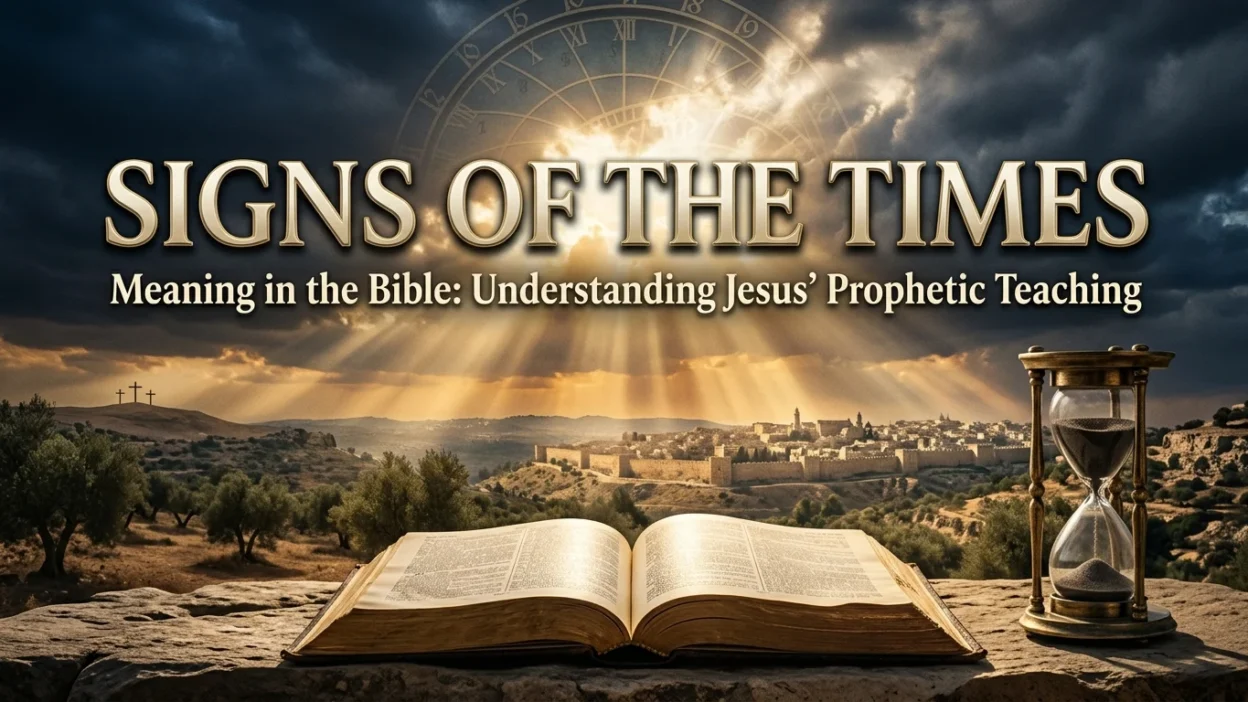
The phrase “signs of the times” in the Bible refers to events, conditions, and changes that help people understand what God is doing and recognize important moments in His plan.
Jesus used this expression when speaking to people who could understand changes in the weather but failed to recognize the spiritual meaning of the events happening around them. It teaches believers to pay attention to God’s Word, develop spiritual understanding, and recognize the importance of the present time.
Many Christians connect the signs of the times with Bible prophecy, the second coming of Jesus Christ, and the end times. However, the expression has a deeper meaning than simply predicting future events. It also encourages people to examine their faith, understand God’s message, and live with wisdom, hope, and readiness.
Quick Answer: What Does Signs of the Times Mean in the Bible?
The signs of the times in the Bible refer to events and circumstances that reveal God’s purposes and help people recognize important spiritual moments. In Matthew 16:3, Jesus challenged religious leaders for recognizing weather patterns but failing to understand the spiritual significance of His ministry and the time in which they were living.
Why Do People Confuse the Meaning of Signs of the Times?
People often confuse the meaning of signs of the times because the phrase is commonly connected with the end of the world and future Bible prophecies.
There are two important ideas to understand:
- Spiritual recognition: Understanding what God is revealing through His Word and the events of the present time.
- Prophetic signs: Recognizing events that the Bible connects with future developments, including the return of Jesus Christ.
These ideas are related, but they are not exactly the same.
Jesus did not encourage people to become obsessed with predicting dates. Instead, He wanted them to recognize spiritual truth and respond with faith.
First Word: What Does “Signs” Mean in the Bible?
The word “signs” refers to things that point toward something important or provide evidence of a particular message.
In the Bible, signs can include miracles, unusual events, prophetic messages, and circumstances that reveal God’s power or purpose.
For example, in John 2:11, Jesus performed His first recorded miracle at the wedding in Cana. The miracle was a sign that revealed His glory and helped His disciples believe in Him.
Other biblical examples include:
- The rainbow after the flood as a sign of God’s covenant (Genesis 9:12–17).
- The miracles performed by Jesus as signs of His authority.
- The signs surrounding the birth of Jesus.
- Events described in biblical prophecy.
A biblical sign is not simply a strange or unusual event. Its meaning should be understood through the context of Scripture.
Second Word: What Does “Times” Mean in the Bible?
The word “times” refers to particular periods, seasons, or moments in history.
In the Bible, time can describe different stages of God’s plan, important spiritual seasons, or moments when people need to respond to His message.
For example, Ecclesiastes 3:1 teaches that there is a season for everything and a time for every purpose under heaven.
The word “times” can also refer to:
- Periods of spiritual change.
- Important moments in biblical history.
- Seasons of judgment or restoration.
- The period before Christ’s return.
- Opportunities to follow God’s direction.
When Jesus spoke about the signs of the times, He was challenging people to recognize the spiritual importance of the period in which they were living.
Signs vs. Times: What Is the Difference?
Although these words work together in the phrase, they have different meanings.
| Word | Biblical Meaning | Simple Explanation |
| Signs | Evidence or indicators | Things that point to something important |
| Times | Periods or seasons | When something important happens |
| Signs of the times | Indicators of an important period | Events that help people recognize spiritual circumstances |
Example: A warning sign tells you that something important is ahead. The time tells you when that situation is happening.
Together, the phrase encourages people to recognize the meaning of important events and understand their spiritual significance.
When Should You Use the Phrase Signs of the Times?
The expression can be used in different biblical and everyday situations.
Use it when discussing:
- Bible prophecy: When explaining events connected with God’s prophetic plan.
- The return of Jesus: When discussing biblical teaching about Christ’s second coming.
- Spiritual awareness: When encouraging people to recognize important spiritual developments.
- Biblical history: When explaining how events revealed God’s purposes.
- Christian teaching: When discussing how believers should respond to the world around them.
For example, a Bible teacher might say, “Jesus encouraged His followers to understand the signs of the times rather than ignore the spiritual message of their generation.
10+ Biblical Examples of Signs of the Times
The Bible contains several passages that help explain this expression. Here are 12 useful examples.
1. Matthew 16:3 – Recognizing the Signs
Jesus criticized the religious leaders because they could interpret the appearance of the sky but could not recognize the signs of the times.
Meaning: Spiritual understanding is just as important as recognizing physical changes.
2. Matthew 24:3–8 – Signs of the End
Jesus described wars, famines, earthquakes, and other troubling events.
Meaning: These events are described as the beginning of birth pains, not as a reason to calculate an exact date for the end.
3. Matthew 24:14 – The Gospel Preached Worldwide
Jesus said that the gospel of the kingdom would be preached throughout the world before the end came.
Meaning: The spread of the gospel is an important part of God’s prophetic message.
4. Luke 21:25–28 – Signs in the Heavens
Jesus spoke about signs in the sun, moon, and stars, along with distress among nations.
Meaning: The passage points toward significant future events and encourages believers to remain hopeful.
5. Mark 13:32–33 – Stay Watchful
Jesus explained that no one knows the exact day or hour.
Meaning: Christians should remain spiritually prepared instead of trying to predict the date of His return.
6. 2 Timothy 3:1–5 – Difficult Times
Paul described difficult conditions in the last days, including selfishness, pride, and a lack of love.
Meaning: The passage warns believers about harmful attitudes and behaviors.
7. 1 Thessalonians 5:1–6 – Stay Awake
Paul encouraged Christians to remain alert and spiritually responsible.
Meaning: Believers should live with faith, love, and readiness.
8. Daniel 12:4 – Knowledge and the End Times
Daniel received a prophetic message about events associated with the time of the end.
Meaning: The passage highlights the mysterious nature of biblical prophecy and God’s unfolding plan.
9. Joel 2:28–32 – The Outpouring of the Spirit
Joel described a time when God would pour out His Spirit on people.
Meaning: This prophecy is connected with the events of Pentecost in Acts 2.
10. Acts 2:16–21 – Peter Explains Joel’s Prophecy
Peter explained that the events at Pentecost fulfilled Joel’s prophecy about the outpouring of the Holy Spirit.
Meaning: God’s promises were becoming visible through the early Christian church.
11. Luke 12:54–56 – Understanding the Present Time
Jesus challenged people who could recognize weather patterns but failed to understand the significance of their present circumstances.
Meaning: People should develop spiritual understanding instead of ignoring God’s message.
12. Romans 13:11–12 – Recognizing the Time
Paul encouraged believers to understand the time and live as people of spiritual light.
Meaning: Christians should take their faith seriously and live in a way that honors God.
Common Mistakes About the Signs of the Times
Many people misunderstand biblical teaching about the signs of the times. Avoid these common mistakes:
- Predicting the exact date of Jesus’ return: Matthew 24:36 explains that no one knows the day or hour.
- Assuming every disaster is a prophetic sign: Not every natural disaster or conflict can be identified as a specific fulfillment of prophecy.
- Ignoring the original context: Matthew 16:3 is about recognizing Jesus’ spiritual significance, not simply predicting future events.
- Focusing only on fear: Biblical teachings about the end times also encourage hope, faith, and perseverance.
- Confusing human opinions with Scripture: Not every popular prediction has biblical support.
- Forgetting the importance of personal faith: Understanding prophecy should encourage people to grow spiritually.
The main lesson is to study Scripture carefully and avoid making claims that the Bible does not support.
Memory Trick: How to Remember the Meaning
An easy way to remember the phrase is:
Signs = What to notice.
Times = When it matters.
Signs of the times = Recognizing what important events reveal about the present spiritual season.
Think of a road sign. It gives you information about what is ahead and helps you prepare for what comes next.
In the same way, biblical signs help people understand important spiritual messages and remain attentive to God’s Word.
American vs. British English: Is There a Difference?
The expression “signs of the times” has the same meaning in American and British English.
There is no major difference in spelling, pronunciation, or biblical interpretation.
| English Type | Expression | Meaning |
| American English | Signs of the times | Important events that reveal changes or developments |
| British English | Signs of the times | Important events that reveal changes or developments |
Both American and British Christians use this expression when discussing biblical prophecy, spiritual awareness, and changes in society.
Similar Words and Related Biblical Expressions
Several expressions have meanings related to signs of the times.
- Prophetic signs: Events or messages connected with biblical prophecy.
- End times: The period associated with the final events in God’s plan.
- Last days: A biblical expression describing a significant period in God’s purposes.
- Spiritual discernment: The ability to recognize and understand spiritual truth.
- God’s timing: The idea that events happen according to God’s purposes.
- Biblical prophecy: A message communicated through God’s prophets concerning His purposes.
- Second Coming: The promised return of Jesus Christ.
These expressions are connected, but they should not be treated as exact synonyms. Each has its own biblical meaning and context.
Final Verdict: What Should Christians Learn From the Signs of the Times?
The signs of the times teach Christians to pay attention to God’s Word, recognize spiritual truth, and understand the importance of the present moment.
Matthew 16:3 shows that Jesus wanted people to develop spiritual awareness rather than focus only on outward circumstances.
The expression is also connected with biblical prophecy and the return of Jesus Christ. However, Scripture does not encourage believers to predict exact dates or live in constant fear.
Instead, Christians should respond through faith, prayer, wisdom, love, and obedience to God.
(FAQs)
1. What does signs of the times mean in Matthew 16:3?
In Matthew 16:3, Jesus used the phrase to challenge religious leaders who could recognize changes in the weather but failed to understand the spiritual significance of His ministry. He wanted them to recognize the important events happening before them.
2. What are the signs of the times according to Jesus?
Jesus described several events in Matthew 24 and Luke 21, including wars, famines, earthquakes, persecution, and the preaching of the gospel. These passages encourage believers to remain watchful and faithful.
3. Are the signs of the times connected to the end of the world?
Yes, the expression is often connected with biblical teachings about the end times and Jesus‘ return. However, its use in Matthew 16:3 also addresses recognizing God’s work in the present moment.
4. Does the Bible say we can know when Jesus will return?
No. Matthew 24:36 says that no one knows the exact day or hour of Jesus’ return. Christians are encouraged to remain prepared rather than predict a specific date.
5. What is the difference between signs of the times and end times?
Signs of the times are indicators that help people recognize important spiritual developments. End times refers to the period associated with the final events in God’s plan. The two expressions are related but have different meanings.
6. Why did Jesus criticize the Pharisees for not recognizing the signs?
Jesus criticized them because they understood natural signs but failed to recognize His identity and the spiritual significance of His ministry. Their problem was a lack of spiritual understanding.
7. How should Christians respond to the signs of the times?
Christians should respond with faith, prayer, spiritual awareness, love, and obedience to God’s Word. They should avoid fear, false predictions, and unnecessary speculation about future events.
Remember This
The signs of the times in the Bible are about recognizing important spiritual events and understanding God’s purposes. Jesus encouraged people to develop spiritual discernment, remain faithful, and prepare their hearts for what God has promised.
The most important lesson is simple: Do not just watch what is happening around you; understand what God’s Word teaches and live faithfully.
Conclusion
The phrase “signs of the times” carries an important message throughout biblical teaching. In Matthew 16:3, Jesus challenged people to recognize the spiritual significance of the time in which they were living. Other passages, including Matthew 24, Luke 21, and 2 Timothy 3, provide further insight into biblical prophecy, spiritual challenges, and the return of Christ. Together, these Scriptures encourage believers to develop wisdom and understand God’s message.
Ultimately, the signs of the times should inspire Christians to strengthen their relationship with God rather than live in fear of the future. By studying Scripture, praying regularly, and practicing faith and love, believers can remain spiritually prepared. The message is not simply about watching world events but about living faithfully and trusting God’s plan.