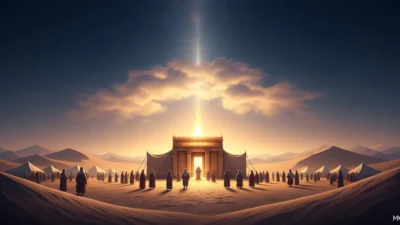

Have you ever heard someone talk about the “end times” in the Bible and felt confused or even a little scared? Many Christians come across the word eschatology and wonder what it really means. It sounds big and complicated, but the message behind it is actually deeply personal and full of hope.
Imagine sitting quietly at night, reading the Bible, and coming across verses about the return of Christ, judgment, and a new heaven and earth. Your heart may start to ask, “What is God trying to tell me through this?” or “How does this connect to my life today?” That’s where the study of eschatology meaning in the Bible becomes important.
Eschatology is not just about the “end of the world.” It is about God’s final plan for humanity, the return of Jesus, and the promise of eternal life. It speaks about hope, restoration, and the victory of good over evil. For many believers, it brings comfort rather than fear.
But what does the Bible really say about it? And how should we understand it in a way that strengthens our faith instead of worrying our hearts?
Let’s explore the true biblical meaning of eschatology and discover the spiritual message God may be revealing through it.
Biblical Meaning of Eschatology in the Bible
The word eschatology comes from the Greek word eschatos, which means “last” or “final.” In simple terms, it is the study of last things death, judgment, the return of Christ, and the final destiny of the soul.
In the Bible, eschatology is deeply connected to God’s promises. It is not meant to create fear but to give believers hope and direction.
One of the most important teachings comes from Matthew 24:36, where Jesus says:
“But about that day or hour no one knows…”
This verse reminds us that the timing of the end is in God’s hands. Our role is not to predict it, but to live faithfully every day.
Another key scripture is John 14:2-3, where Jesus says:
“I go to prepare a place for you…”
This shows the heart of eschatology: eternal life with God.
Biblically, eschatology includes several key events:
- The return of Jesus Christ (Second Coming)
- The resurrection of the dead
- The final judgment
- The creation of a new heaven and new earth (Revelation 21:1)
The book of Revelation is the most well-known source of eschatological teaching. It uses symbolic language like trumpets, seals, and heavenly visions. While some parts can feel intense, the main message is clear: God wins in the end, and His people are restored.
There is also a warning side. The Bible encourages believers to stay spiritually awake and not grow cold in faith. Jesus often said, “Be ready.” This is not to create fear but to encourage a life of holiness, prayer, and trust in God.
So, the eschatology meaning in the Bible is both a promise and a reminder:
- A promise of eternal life
- A reminder to live faithfully today
It is about hope, not horror.
Spiritual Significance and Symbolism
The spiritual meaning of eschatology goes beyond future events. It speaks to the deep transformation of the heart.
In a spiritual sense, eschatology reminds us that life is moving toward a divine purpose. Nothing is wasted. Every prayer, every tear, and every act of faith is part of God’s bigger plan.
It symbolizes:
- Hope in God’s promise
- Transformation of the soul
- Victory of light over darkness
- Renewal and restoration
For example, when someone is going through a hard season loss, confusion, or fear the message of eschatology can bring peace. It reminds them that this world is not the end of the story.
Spiritually, it also calls believers to live with purpose. When you know that God has a final plan of restoration, it changes how you treat others, how you pray, and how you trust Him.
Even in daily life, eschatological hope can look like:
- Choosing forgiveness instead of anger
- Trusting God during uncertainty
- Staying faithful in prayer even when answers are delayed
This is the deeper spiritual symbolism: God is always working toward restoration in your life and in the world.
Biblical Interpretations in Dreams or Real Life
Sometimes people feel worried when they dream about end-time events, judgment, or symbolic images like fire, clouds, or heavenly light. In a Christian understanding, such dreams are not always literal predictions.
Instead, they may reflect:
- A call to spiritual awareness
- A reminder to return to faith
- A need for inner peace and prayer
For example:
- A peaceful dream about light or heaven may symbolize God’s presence and comfort
- A fearful dream about chaos may reflect inner anxiety or spiritual struggle
- Repeated thoughts about the end times may be a reminder to strengthen faith and trust God
The Bible encourages believers to test everything in prayer. 1 John 4:1 says to “test the spirits,” meaning we should seek God’s guidance and not panic over every vision or dream.
In real life, eschatology also shows up when people think about mortality, justice, or hope for a better world. It gently points the heart back to God’s promise of eternal peace.
Practical Lessons & Faith Insights
The study of eschatology meaning in the Bible teaches us one powerful truth: live ready, live faithful, and live in hope.
Instead of fear, it invites us to:
- Trust God’s timing
- Stay close to prayer
- Walk in love and forgiveness
God’s plan is not to confuse you but to guide you into peace and purpose.
Conclusion
Eschatology in the Bible is not just about the end it is about God’s beautiful beginning after the end. It reminds us that Jesus is coming, hope is alive, and eternity is secure for those who trust Him.
No matter what you are facing today, God’s final message is clear: He is in control, and His plan leads to restoration and peace. Walk in faith, stay in prayer, and trust His perfect timing.