
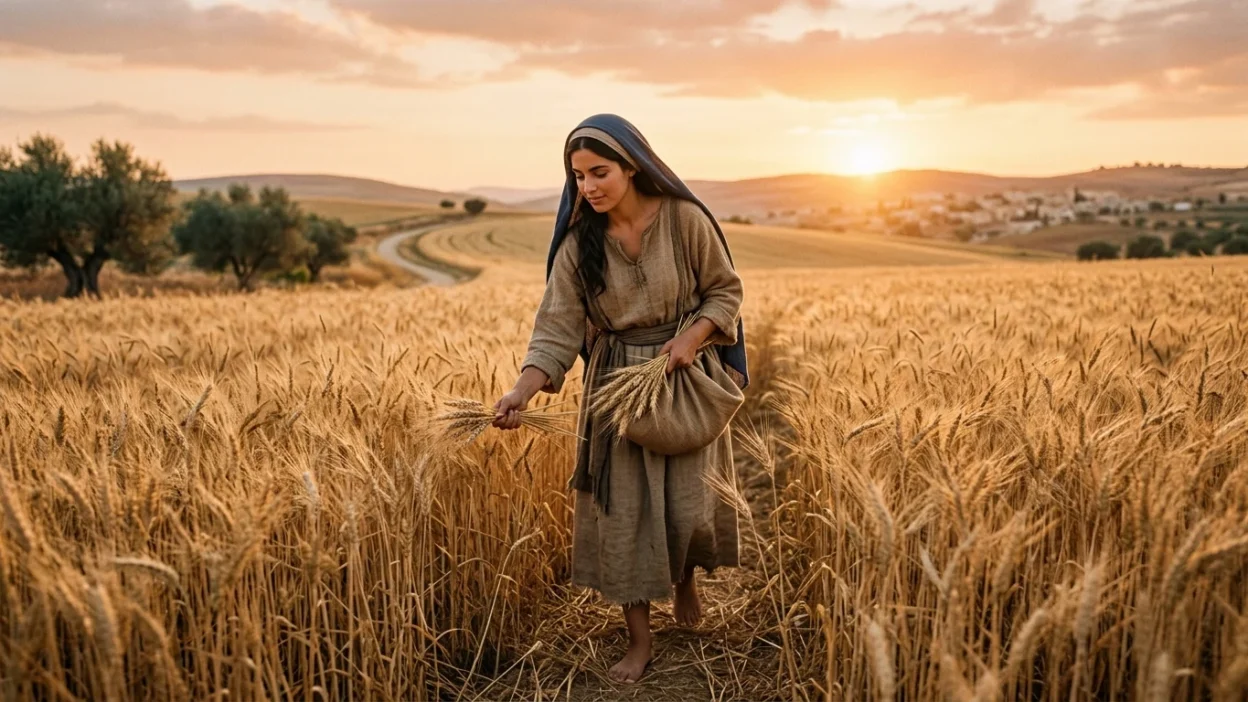
Have you ever seen someone picking up leftover grains from a field after harvest? It may look small or even unimportant. But in the Bible, this simple act carries a deep and beautiful meaning.
This is called “gleaning.” It appears in the story of Ruth, a poor widow who went into the fields to gather leftover grain so she could survive. At first, it seems like just hard work and survival. But as we read deeper, we see something powerful God was quietly taking care of her.
Many believers today still ask: What does glean mean in the Bible? Why is it important?
The answer is full of hope. Gleaning is not just about food. It is about God’s kindness, provision, and care for the forgotten. It shows us how God never wastes anything even leftovers can become a blessing.
Let’s go deeper into the biblical meaning of gleaning and discover what God is saying through it.
Biblical Meaning of Gleaning in the Bible
In the Bible, gleaning means collecting leftover grain or produce after the harvest. It was not random. God actually commanded His people to leave some behind for people with low income, widows, and foreigners.
God’s Command About Gleaning
In Leviticus 19:9-10, God tells the Israelites:
“When you reap the harvest of your land, do not reap to the very edges of your field or gather the gleanings of your harvest. Leave them for people with low income and the foreigner.”
This shows something very important: God cares deeply for the needy. He built compassion into the law itself.
Another verse, Deuteronomy 24:19-22, repeats this idea. God reminds His people to leave behind grain, olives, and grapes for those who are struggling.
The Story of Ruth
One of the most powerful examples of gleaning is found in the Book of Ruth.
Ruth was a widow with no money or protection. She followed her mother-in-law, Naomi, to a foreign land. To survive, she went to the fields to glean after the harvest workers.
There, she met Boaz a kind and wealthy landowner who noticed her. Boaz didn’t just allow her to glean. He protected her, provided extra grain, and showed her kindness.
This moment changed Ruth’s life completely. She went from poverty to becoming part of God’s greater plan, even entering the family line of King David and Jesus Christ.
Spiritual Meaning Behind Gleaning
Gleaning is more than farming practice. It represents:
- God’s provision for people with low income
- Grace given through leftovers
- Hope in difficult seasons
- Unexpected blessings
It teaches us that even when life feels like we are picking up “leftovers,” God is still working for our good.
Spiritual Significance and Symbolism of Gleaning
Spiritually, gleaning carries a deep message about humility, trust, and God’s care.
1. God Provides Even in Hard Times
Gleaning shows that God does not forget the broken or struggling. Even when life feels empty, He leaves “something behind” for us to survive and grow.
It reminds us of Matthew 6:26, where Jesus says God feeds the birds of the air. If He cares for them, He surely cares for us.
2. Humility Opens Doors
Ruth did not complain about her situation. She worked humbly in the fields. Because of her humility, she received blessing and favor.
This teaches us that humility brings divine opportunities. Sometimes God’s blessings come when we are willing to start small.
3. God Uses What Seems Small
Gleaning looks like “leftovers,” but in God’s hands, it becomes a miracle.
What others overlook, God can turn into something great. This is a powerful reminder for anyone who feels forgotten or unimportant.
4. God’s Grace Is Always Present
Boaz represents God’s kindness. He didn’t have to help Ruth but he did. In the same way, God’s grace often shows up when we least expect it.
Even in your weakest season, God is still providing through grace you did not earn.
Biblical Interpretations in Dreams or Real Life
Sometimes people may see fields, grain, or gathering food in dreams or daily thoughts and wonder what it means.
From a biblical perspective, gleaning in dreams often symbolizes provision, patience, or a season of waiting.
If the field is full and peaceful
This can represent God’s abundant provision coming into your life. It may show that blessings are already prepared for you.
If you are gathering slowly
This may reflect a season of waiting or slow growth. God may be teaching patience and trust.
If the field feels empty
This could reflect emotional or spiritual dryness. But spiritually, it can also be a reminder that God still leaves “something” for you, even in hard seasons.
If someone helps you while gleaning
This often represents divine help or favor, similar to how Boaz helped Ruth. It can be a sign that God is sending support into your life.
In all cases, the message remains the same: God is near, and He provides in every season.
Practical Lessons & Faith Insights
Gleaning teaches us simple but powerful truths:
- God cares for every need, even small ones
- Humility opens the door to blessing
- Nothing in your life is wasted by God
- Even “leftovers” can become miracles
Take time today to reflect, pray, and trust that God is still providing for you even in quiet ways.
Conclusion
The meaning of gleaning in the Bible is a beautiful picture of God’s care, grace, and provision. It reminds us that even in hard seasons, God leaves blessings behind for those who trust Him.
Just like Ruth found hope in the fields, you can also find hope in your life today. God is still working, still providing, and still guiding your steps.
Even what looks small is not forgotten by Him. Trust that God’s grace is always enough for you.