
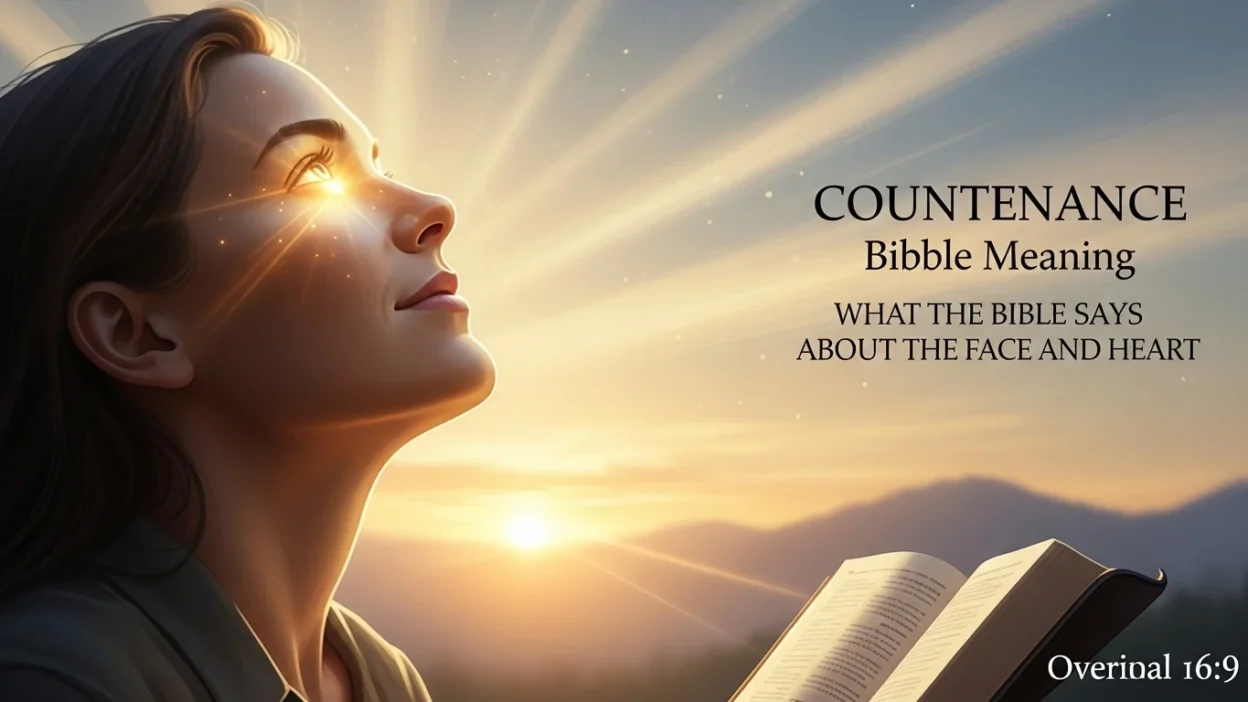
Imagine meeting someone who is filled with joy. Before they even speak, you can see it on their face. Their smile is warm. Their eyes shine with peace. Their whole countenance feels bright.
Now imagine the opposite. Someone walks into the room with a heavy heart. Their face looks troubled. Their eyes look tired. Even without words, their countenance tells a story.
The Bible often talks about this idea. In Scripture, the word countenance usually means a person’s face, expression, or the look that shows what is inside the heart. It can reveal joy, fear, anger, peace, or sadness.
But the Bible goes even deeper.
Sometimes countenance also describes the presence of God shining upon someone. It can represent favor, blessing, peace, and divine light.
So when you read about countenance in Scripture, it is not just about a face. It is about the condition of the heart and the presence of God in a person’s life.
What does the countenance Bible meaning really tell us? And why does the Bible use this word to reveal spiritual truth?
Let’s explore the deeper biblical symbolism and spiritual message behind countenance.
Biblical Meaning of Countenance
In the Bible, countenance refers to the face or facial expression, but it often represents something deeper the inner condition of the soul.
A person’s countenance reflects what is happening inside their heart.
1. Countenance Reflects the Heart
The Bible shows that emotions and spiritual states often appear on the face.
One clear example appears in the story of Cain.
Genesis 4:6
“And the Lord said unto Cain, Why art thou wroth? and why is thy countenance fallen?”
Cain’s fallen countenance revealed his anger and jealousy before he even acted. His face showed what his heart was feeling.
This teaches an important Christian meaning: our inner thoughts and emotions often become visible through our expression.
A joyful heart brings a bright face.
Proverbs 15:13
“A merry heart maketh a cheerful countenance: but by sorrow of the heart the spirit is broken.”
This verse shows the connection between heart and face. When the heart is joyful, the countenance becomes cheerful.
2. Countenance as a Sign of God’s Favor
The Bible also uses countenance to describe God’s presence shining on His people.
One of the most beautiful blessings in Scripture uses this word.
Numbers 6:24–26
“The Lord bless thee, and keep thee: The Lord make his face shine upon thee, and be gracious unto thee: The Lord lift up his countenance upon thee, and give thee peace.”
Here, God’s countenance represents divine blessing and protection.
When God lifts His countenance toward someone, it means:
- Favor
- Grace
- Peace
- Guidance
It is a powerful image of God looking kindly upon His people.
3. A Changed Countenance After Prayer
Sometimes a person’s countenance changes when God brings comfort or hope.
We see this in the story of Hannah.
She was deeply sad because she could not have a child. She prayed with tears at the temple.
After praying, something changed.
1 Samuel 1:18
“So the woman went her way, and did eat, and her countenance was no more sad.”
Her situation had not changed yet.
But her countenance changed because her heart found peace in God.
This shows an important spiritual message: Prayer can transform the face because it transforms the heart.
4. Countenance Can Reveal Spiritual Darkness
The Bible also warns that a troubled or hardened heart can appear in a person’s countenance.
For example, when someone carries anger, bitterness, or pride, their expression often reflects it.
The Bible encourages believers to seek God’s light so their countenance reflects peace instead of darkness.
Psalm 34:5
“They looked unto him, and were lightened: and their faces were not ashamed.”
When people turn toward God, their faces become radiant with hope.
Spiritual Significance and Symbolism
The spiritual symbolism of countenance goes far beyond physical appearance.
In the Bible, the face often represents the visible reflection of the soul.
When someone walks closely with God, it often shows in the way they carry themselves. Their countenance can reveal:
- Peace
- Kindness
- Faith
- Hope
A beautiful example appears with Moses.
After speaking with God on Mount Sinai, his face shone with God’s glory.
Exodus 34:29
“Moses wist not that the skin of his face shone while he talked with him.”
His shining face symbolized the presence of God.
This teaches a powerful spiritual lesson: time spent with God changes a person from the inside out.
Even today, people often notice something different about those who live with deep faith. Their words may be gentle. Their expression may be calm. Their countenance reflects inner peace and spiritual transformation.
This does not mean believers never feel sadness. But even during hardship, faith can bring quiet strength and hope that shines through.
In Christian belief, a peaceful countenance becomes a silent testimony of God’s work in the heart.
Biblical Interpretations in Dreams or Real Life
Sometimes people notice countenance in dreams or real-life experiences, and it can carry symbolic meaning.
In biblical dream interpretation, the face often represents the emotional or spiritual state of a person.
For example:
A bright or joyful countenance This may symbolize:
- God’s favor
- inner peace
- answered prayer
- spiritual joy
It can be a reminder that God’s presence brings light into life.
A sad or fallen countenance
This may represent:
- emotional struggle
- spiritual conflict
- hidden anger or sorrow
Just like in the story of Cain, a fallen countenance can point to something deeper happening in the heart.
A shining or glowing face
This often represents divine presence, spiritual awakening, or closeness with God, similar to Moses’ experience.
When such symbols appear, many Christians respond with prayer and reflection, asking God for guidance and understanding.
The Bible reminds believers that God often speaks through His Word, prayer, and the quiet work of the Holy Spirit.
Practical Lessons & Faith Insights
The countenance Bible meaning reminds believers that the heart and face are connected.
When the heart draws close to God, the countenance reflects peace and hope.
Spend time in prayer, Scripture, and trust in God’s promises. Over time, His presence can transform not only your heart but also the way you carry yourself each day.
A peaceful countenance becomes a quiet sign of faith and spiritual light.
Conclusion
In the Bible, countenance is more than a facial expression. It reflects the condition of the heart and the presence of God in a person’s life.
Scripture shows that joy brightens the countenance, sorrow can weigh it down, and God’s favor can cause it to shine with peace.
The deeper message is simple but powerful: when people seek God with faith, their hearts change and that change often becomes visible.
So if you ever notice the word countenance in the Bible, remember its spiritual meaning.
It is a reminder that God’s presence can transform the heart and bring light to the face, filling life with hope, peace, and divine guidance.